Ceiling water damage can mean an active roof leak, plumbing issue, AC drain problem, or water from an upper floor. Our McKinney ceiling repair team locates the moisture path, dries affected materials, removes unsafe sections when needed, and plans clean repairs.
Tell us where the stain or leak is located, whether the ceiling is sagging, and if water is still dripping. We will help you respond safely.
Ceiling water damage should be inspected promptly because the visible stain is often only part of the problem. Moisture may be trapped above the ceiling in insulation, framing, drywall, or light fixture areas. If a ceiling is sagging, cracked, or actively dripping, safety comes before cleanup.
Ceiling damage can be misleading because the stain may be smaller than the wet area above it. We check nearby drywall, insulation, framing, and fixture openings so the repair is based on the full moisture pattern.
We inspect the room below and the area above when accessible. Common causes include roof leaks after storms, leaking supply lines, bathroom overflows, tub or shower failures, AC condensate problems, and appliance leaks from upstairs. The repair plan depends on whether the ceiling can be dried in place or whether damaged drywall and insulation need removal.
As a leading provider of Commercial Restoration Services, we are dedicated to protecting your property and ensuring complete recovery.
Drying comes before cosmetic repair. Painting over a stain without checking moisture can trap damp material and allow odor or mold concerns to develop. We use moisture readings to determine when the ceiling area is ready for repair, then identify the needed finish work such as drywall patching, texture blending, primer, and paint.
Ceiling repairs are also about timing. If drywall is patched before the leak is stopped or insulation is dry, the stain can return and the repair may fail. We check the surrounding ceiling and nearby wall areas, not just the darkest spot. When removal is needed, we keep it controlled so the damaged material can be opened, dried, and rebuilt without turning a localized leak into unnecessary demolition.
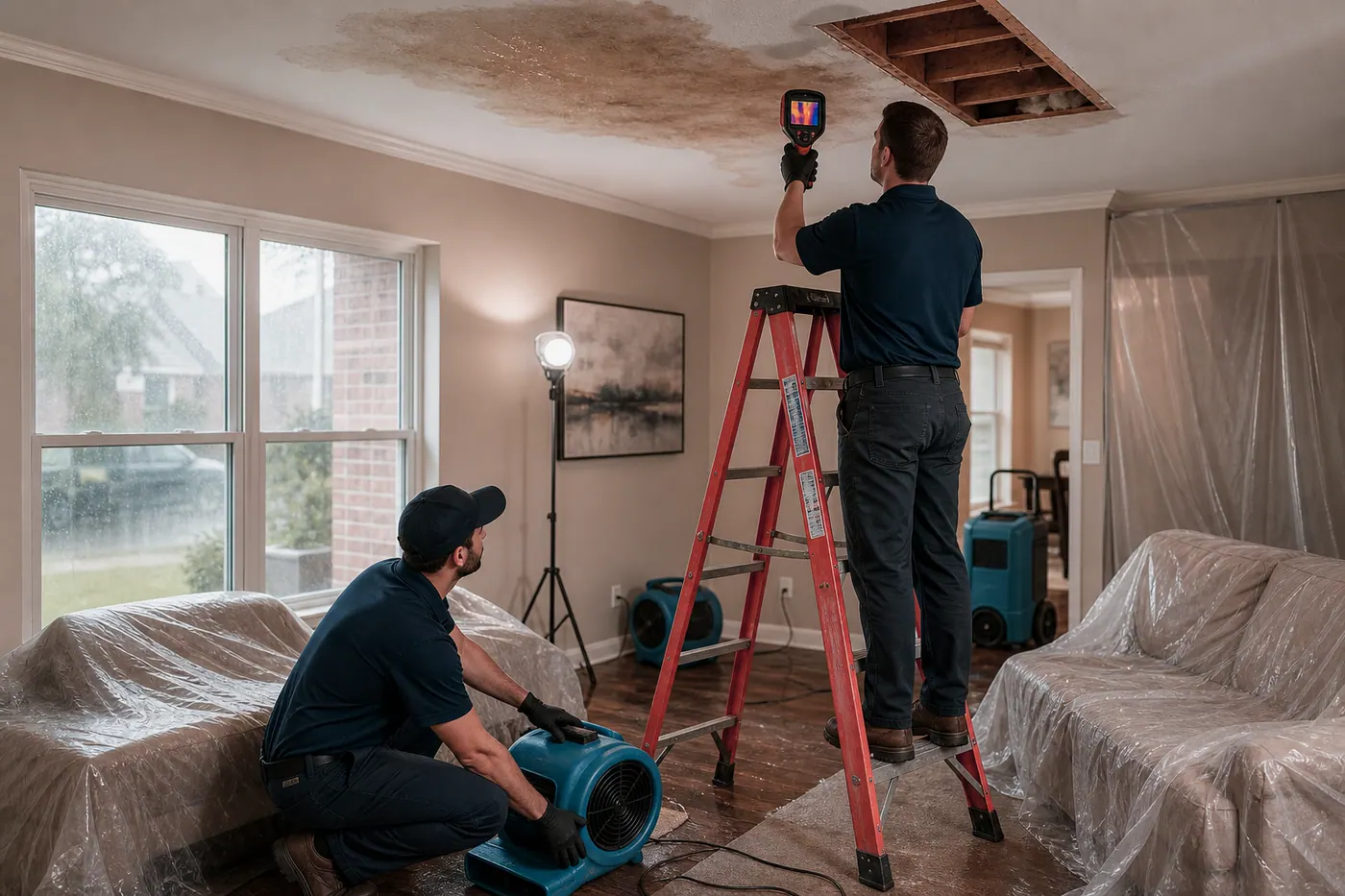
Ceiling leaks should be addressed quickly because saturated drywall can weaken, sag, stain, or collapse if ignored.
Moisture meters, thermal imaging, containment, drying equipment, and controlled removal tools help us evaluate ceiling damage safely.
Our technicians understand how water moves through framing, insulation, drywall seams, light openings, and attic spaces.
Photos, moisture readings, and scope notes help document the cause, affected area, drying steps, and repair needs.
Ceiling repair after water damage starts with safety and moisture control. Repairs should only begin once the leak source is addressed and affected materials are dry.
The ceiling process also considers what is above the damaged area. Wet insulation, attic moisture, plumbing cavities, or upstairs flooring can continue feeding moisture into the ceiling if they are missed. We check those related areas before recommending patching, painting, or texture work.
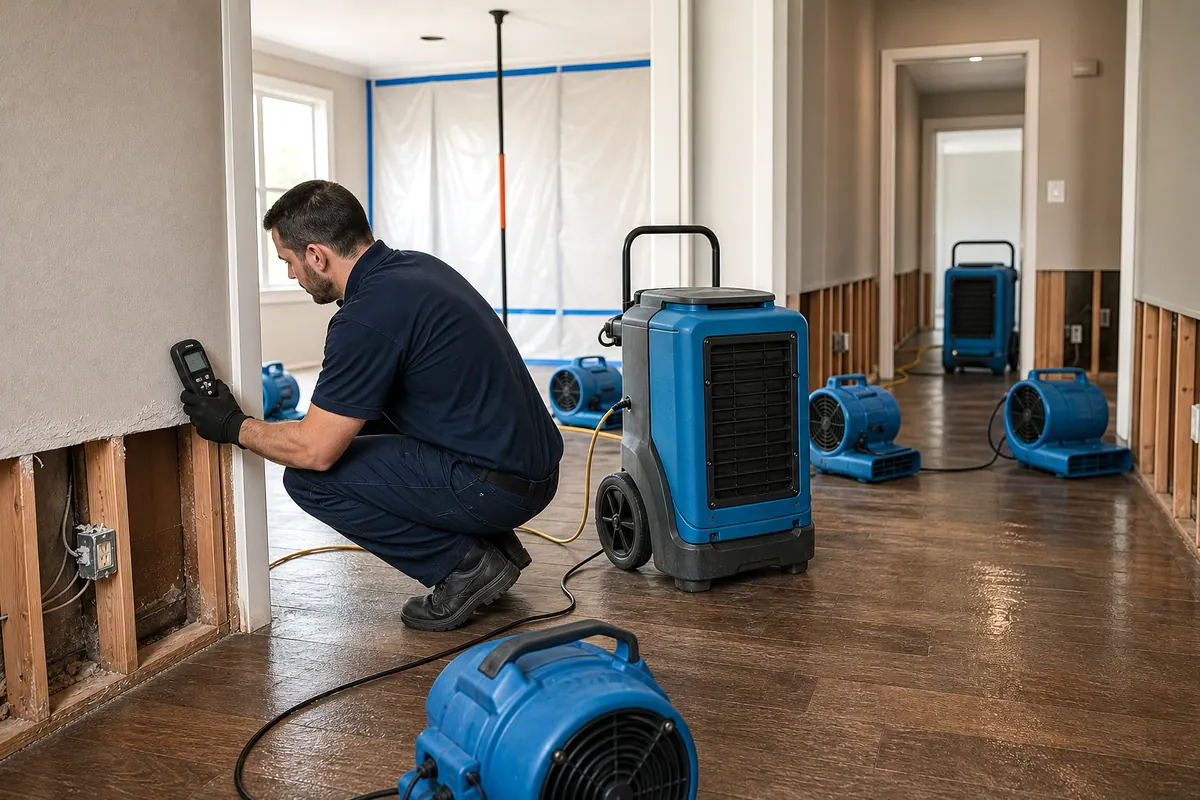
Call right away if the ceiling is wet, sagging, stained, or dripping. Avoid standing under a bulging ceiling and keep electricity off in affected fixtures until the area is evaluated.
Coverage depends on the cause. Sudden plumbing or storm-related damage may be reviewed differently than long-term leaks. Documentation of the source and moisture conditions helps the claim process.
Yes. Moisture above a ceiling can remain trapped in insulation and drywall. Mold can grow if the area is painted over or repaired before it is properly dried.
If you see a ceiling stain, drip, or sagging drywall in McKinney, call for an inspection before the damage spreads or the ceiling becomes unsafe. We will help determine whether the ceiling can dry in place or needs controlled removal and repair. We will also check surrounding materials so the visible stain is not repaired before hidden moisture is handled. That helps avoid a cosmetic patch that hides moisture instead of correcting the actual ceiling damage.