Emergency water removal protects your property in the first critical hours after a leak, overflow, storm intrusion, or plumbing failure. Our McKinney team removes standing water quickly and starts the drying process before moisture spreads deeper.
Tell us the water source, affected rooms, and whether standing water is present. We will help you take safe steps while a crew is prepared.
Emergency water removal is the fast extraction phase that keeps damage from expanding. It is needed when water is actively pooling, soaking carpet, running under floors, entering from above, or spreading from room to room. Quick removal reduces absorption and makes the rest of the restoration process more effective.
Emergency water removal is especially important in rooms with layered flooring, cabinets, or shared walls. Those areas can hold moisture after standing water is gone, so we check the surrounding materials before the job moves into drying.
We respond by identifying the source, checking safety, and removing water with the right equipment for the surface. A bathroom overflow, burst pipe, leaking water heater, storm leak, or appliance failure may all require different handling. We also check nearby walls, trim, cabinets, and flooring because standing water often hides along edges and underneath finishes.
As your trusted Experienced Restoration Contractors, we are dedicated to protecting your property and ensuring complete recovery.
Once bulk water is removed, we do not stop there. Moisture readings show whether the structure still needs drying. Carpet pad, subfloors, drywall, and wood can remain damp after extraction. We use drying equipment and monitoring to help prevent odors, swelling, and mold concerns after the emergency is under control.
Emergency removal also helps create a clean starting point for the rest of the job. Once standing water is gone, we can see which materials are swollen, stained, loose, or still reading wet. That prevents hidden damage from being missed during the rush of the emergency. It also helps the insurance documentation because the initial water level, affected rooms, and extraction work are recorded before the property begins to change.
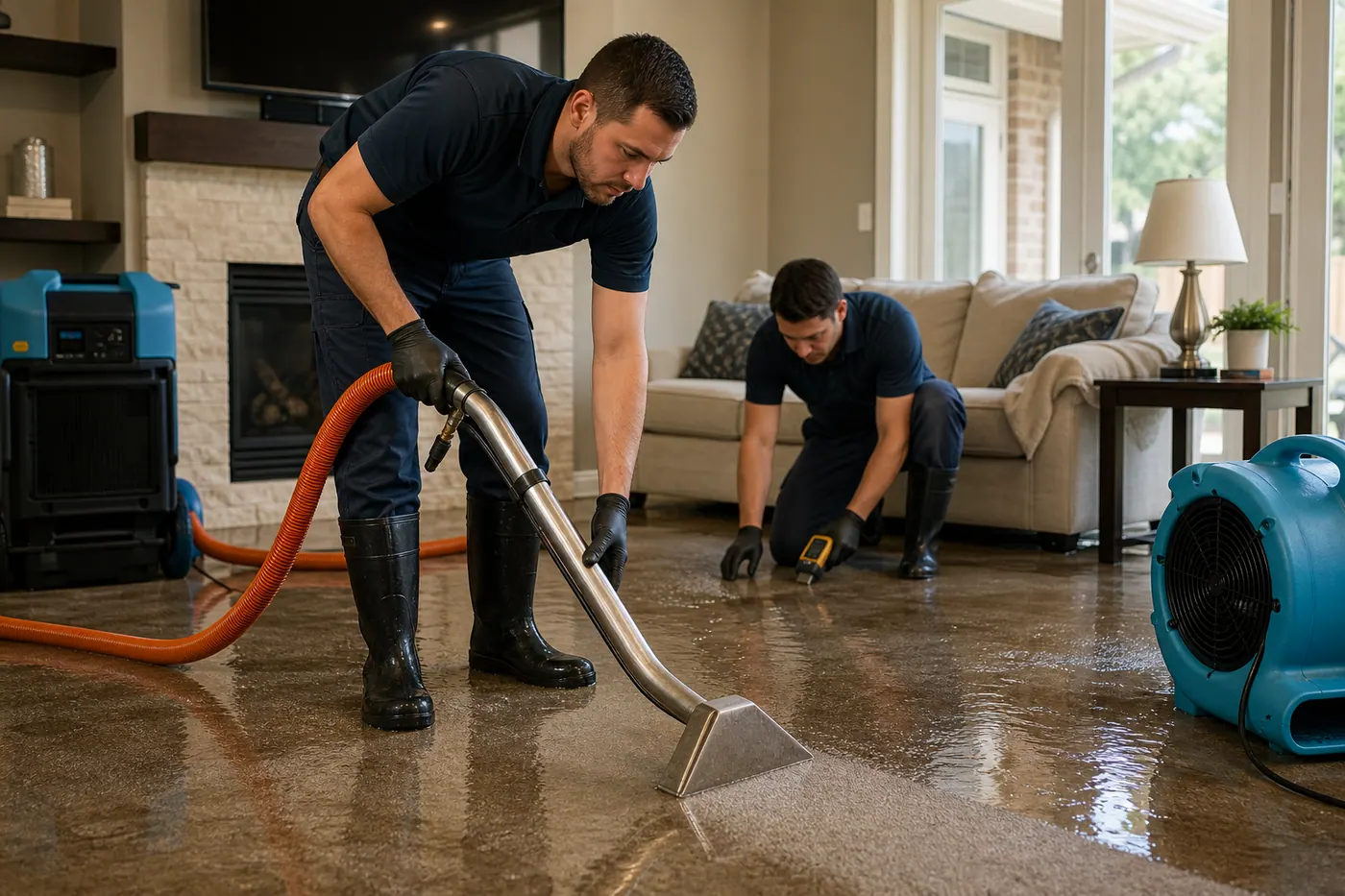
Emergency removal reduces the time water has to soak into flooring, walls, trim, cabinets, and contents.
Portable extractors, pumps, air movers, dehumidifiers, and moisture meters help us remove water and identify what still needs drying.
Our technicians understand how different water sources affect cleanup, from clean supply water to drain backups and storm intrusion.
We document the source, water level, affected materials, extraction work, and drying needs for property owners and insurance review.
Emergency water removal is direct and time sensitive. We remove water first, then confirm what materials still need drying or repair.
Emergency removal is followed by a quick but important reassessment. Once water is extracted, some materials that looked fine may still read wet, while others may be ready for drying in place. That second look helps prevent missed moisture and keeps the restoration plan realistic.
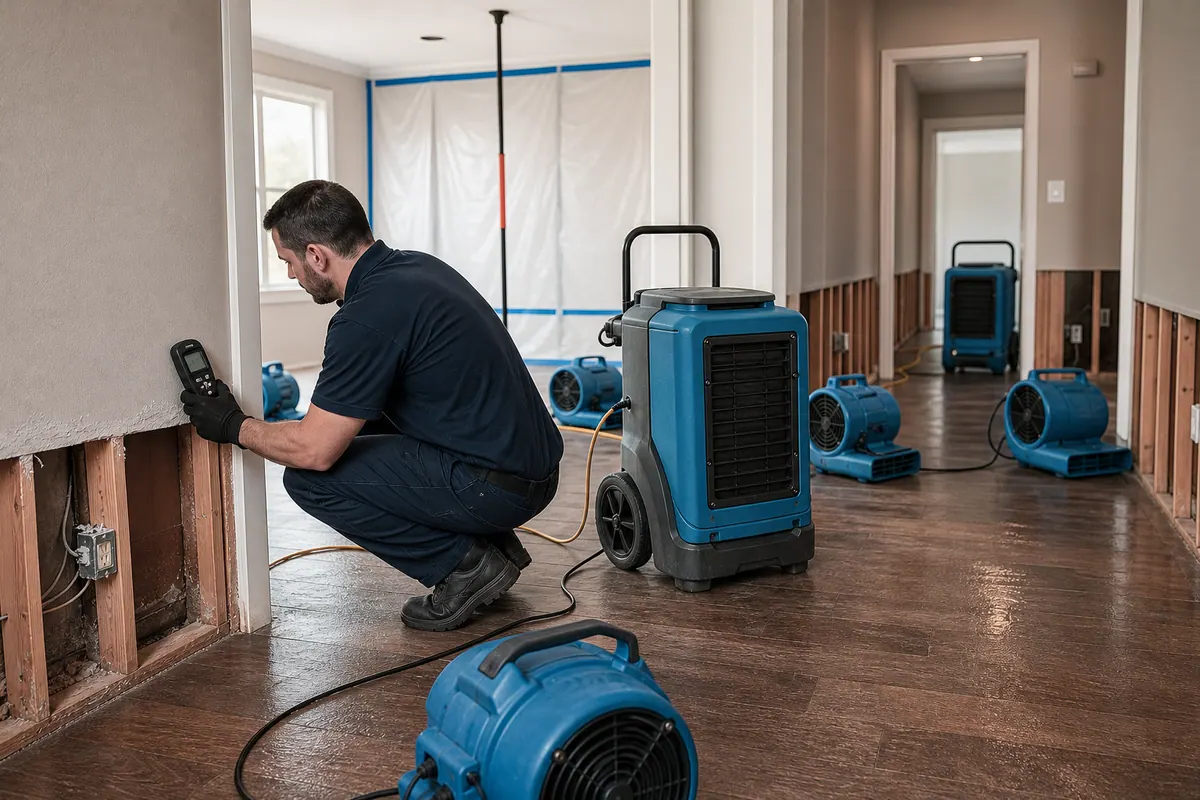
Call immediately when water is standing, spreading, or soaking into materials. Even a delay of a few hours can allow water to reach subfloors, wall edges, and nearby rooms.
Coverage depends on the cause of the water. Sudden pipe, appliance, or fixture failures are often reviewed differently than outside flooding or long-term leaks. Documentation helps clarify the situation.
Yes. Water removal lowers the risk, but mold prevention also requires drying hidden moisture. We check materials after extraction so damp areas are not left behind.
If standing water is inside your McKinney property, call now for emergency water removal. We can extract water and begin drying before damage spreads. We will remove the water, check the affected materials, and help you understand what drying or repairs should happen next. We will also document the affected areas before conditions change, which can help during the insurance review. That gives the drying phase a more accurate starting point and helps prevent missed damage.