Standing water should be removed quickly and correctly. Our McKinney water extraction team uses professional pumps, extractors, and moisture checks to remove water from floors, carpets, basements, and affected rooms before it soaks deeper into the structure.
Let us know how much water is present, which rooms are affected, and whether the source has been stopped. We will help decide the right extraction response.
Water extraction is the first physical step in many restoration jobs. It reduces the amount of moisture that flooring, subflooring, trim, and drywall can absorb. A shop vacuum or towels may help with a small surface spill, but larger losses need professional extraction because water hides in carpet pad, expansion gaps, wall edges, and low spots.
In McKinney homes with open layouts, water can move from one room to another before it looks serious. We pay close attention to transitions, baseboards, doorways, and flooring edges because those are common places where moisture hides after extraction.
We extract water based on the surface and the category of water involved. Clean water from a supply line may allow more materials to be saved. Water from a drain, toilet, or outside source requires stricter handling. Our technicians inspect affected materials before extraction so cleanup decisions are made safely, not just quickly.
As a leading provider of Commercial Restoration Services, we are dedicated to protecting your property and ensuring complete recovery.
Extraction is only part of the job. After water is removed, many materials still hold moisture. Carpet backing, wood flooring, drywall, sill plates, and cabinets can remain damp even when standing water is gone. That is why we follow extraction with moisture mapping, drying equipment, and monitoring to confirm the property is moving toward dry conditions.
Good extraction also improves drying efficiency. The more bulk water removed early, the less moisture drying equipment has to pull from carpet, wood, drywall, and concrete. That can reduce equipment time and limit how far humidity spreads through the property. For McKinney homes with open floor plans, water can travel farther than expected, especially under floating floors or along baseboards. We check those edges and transitions so extraction is not limited to the most obvious puddle.
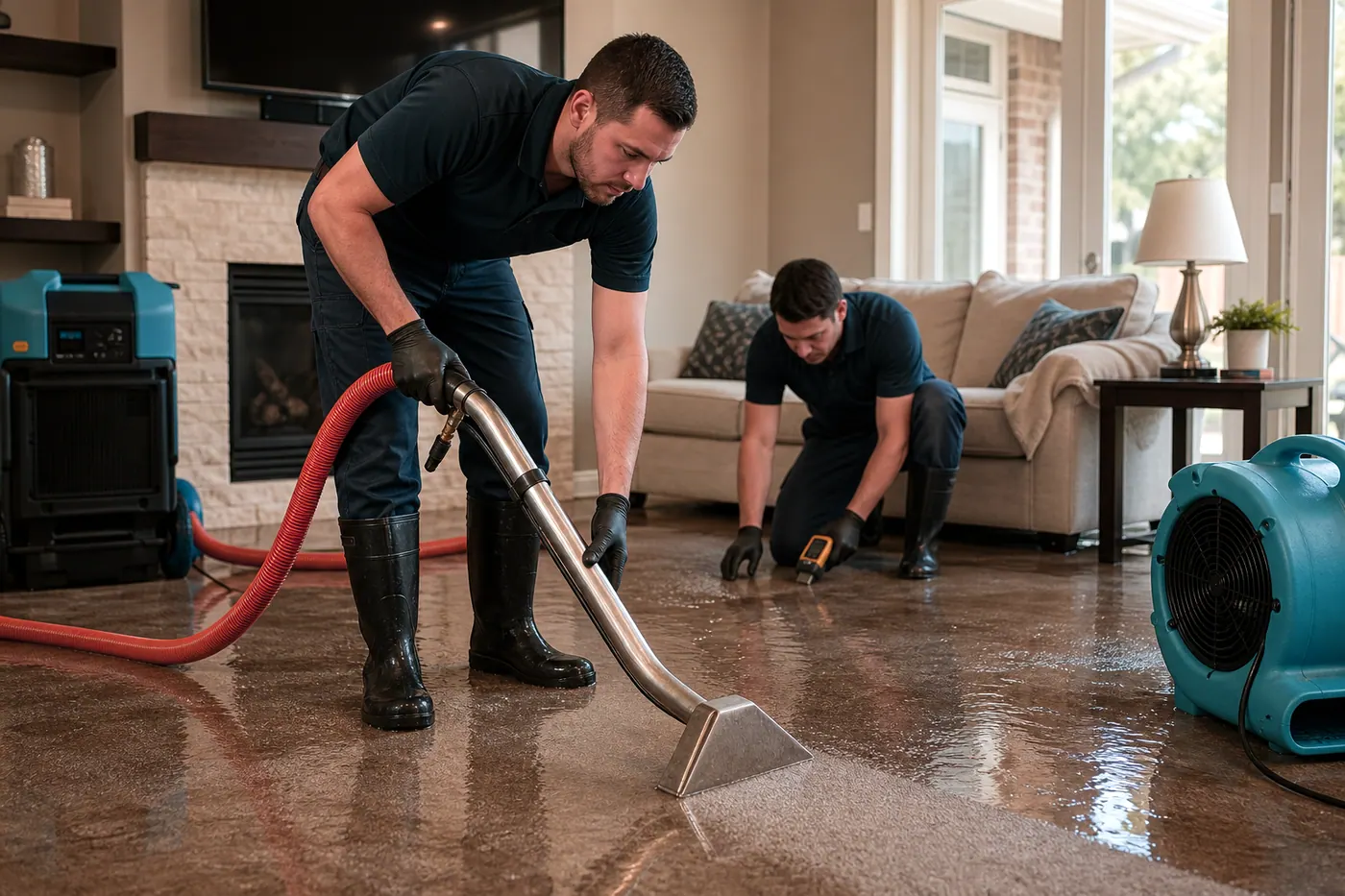
Removing water early limits absorption into porous materials and helps reduce the chance of swelling, staining, odors, and mold growth.
We use extraction tools suited for carpets, hard surfaces, edges, and larger areas where water has collected across a room or floor.
Technicians evaluate water category and affected materials before deciding what can be extracted, dried, cleaned, or removed.
Extraction records, photos, and moisture readings help support the rest of the restoration plan and insurance review.
A careful extraction process protects materials while preparing the property for drying. We remove bulk water first, then look for what remains hidden.
After extraction, we review the remaining moisture pattern so the drying phase is not treated like an afterthought. If water reached baseboards, cabinets, carpet pad, or subflooring, extraction alone will not finish the job. The follow-up readings tell us where air movement and dehumidification should be focused.
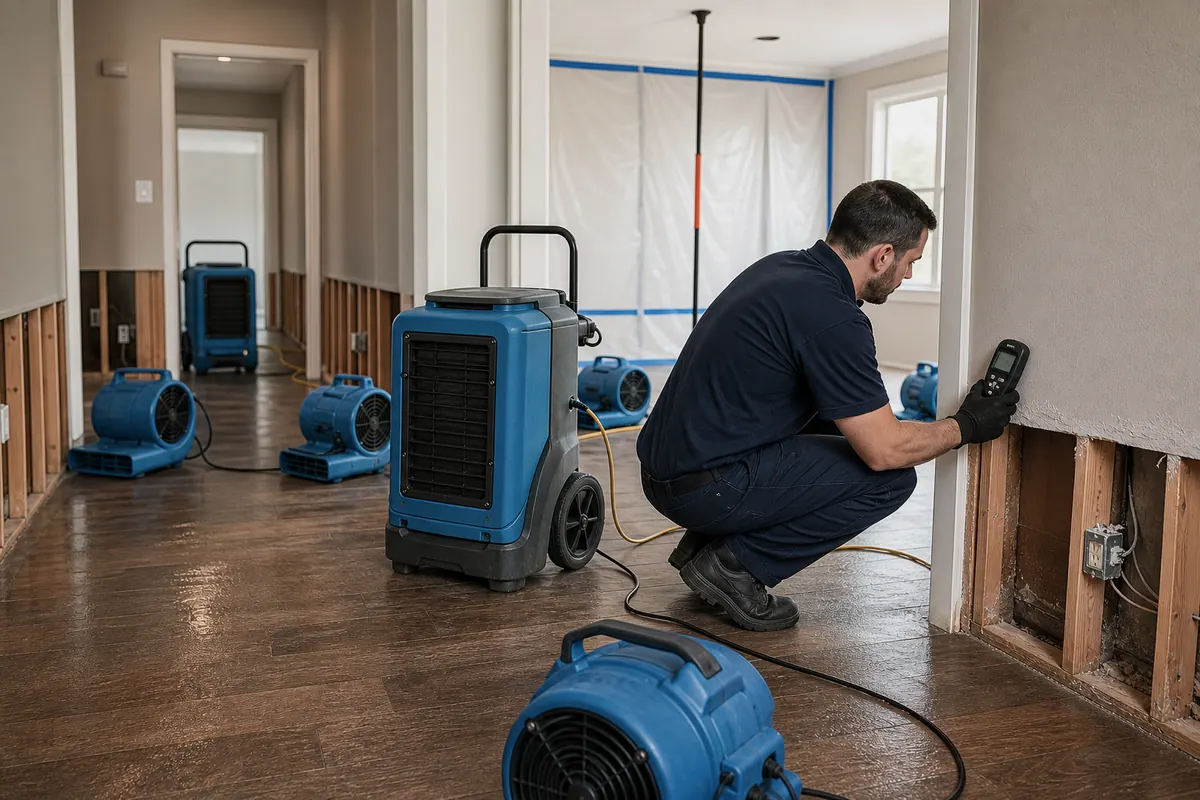
Professional extraction should begin as soon as possible after standing water is discovered. The longer water sits, the more it can move into subfloors, wall edges, cabinets, and carpet pad.
Insurance may cover extraction when the water damage comes from a covered sudden event. Documentation matters, so we record what was wet, how much water was present, and what extraction work was performed.
Yes, if moisture remains after extraction. Removing visible water is not the same as drying the structure. Mold prevention depends on moisture readings, airflow, and dehumidification after extraction is complete.
If you have standing water in your McKinney home or business, call before it spreads. We can remove bulk water and begin the drying process quickly. After extraction, we will show you what still needs drying and why visible water removal is only the first step.