North Texas storms can bring roof leaks, wind-driven rain, ceiling stains, flooded rooms, and wet insulation. Our McKinney storm damage restoration team helps stabilize the property, remove water, dry affected materials, and document the loss for repair planning.
Tell us whether water is still entering, where you see stains or wet areas, and if the roof or ceiling appears unsafe. We will help you respond safely.
Storm damage restoration often combines water cleanup, leak tracing, drying, and temporary protection. Heavy rain can enter through damaged shingles, flashing, vents, windows, doors, or drainage problems. Water may show up as a ceiling stain in one room while traveling from a roof issue several feet away. A careful inspection helps find the full damage path.
Storm water often appears far from the actual entry point. In McKinney homes, wind-driven rain can show up around ceiling seams, window trim, attic spaces, or upper walls, so we inspect the visible damage and nearby moisture paths together.
We look for wet ceilings, wall staining, damp insulation, swollen trim, wet flooring, and moisture in nearby areas. If water is still entering, temporary measures may be needed before drying can work. Once the source is controlled or weather allows stabilization, we remove water and begin drying materials that can be saved.
As a leading provider of Restoration Support for Homeowners, we are dedicated to protecting your property and ensuring complete recovery.
Storm restoration also requires documentation. Insurance adjusters often need photos of interior damage, moisture readings, affected materials, and notes on the likely entry point. We help organize the interior restoration scope while property owners coordinate roof or exterior repairs when needed.
Storm losses can be frustrating because the entry point is not always obvious during the first inspection. Water may enter at the roof but appear on a lower wall, around a window, or near a ceiling seam. We document the interior damage and moisture path so repairs can be coordinated with any roof, gutter, flashing, or exterior work. That coordination matters when more rain is expected and the interior needs protection before finish repairs begin.
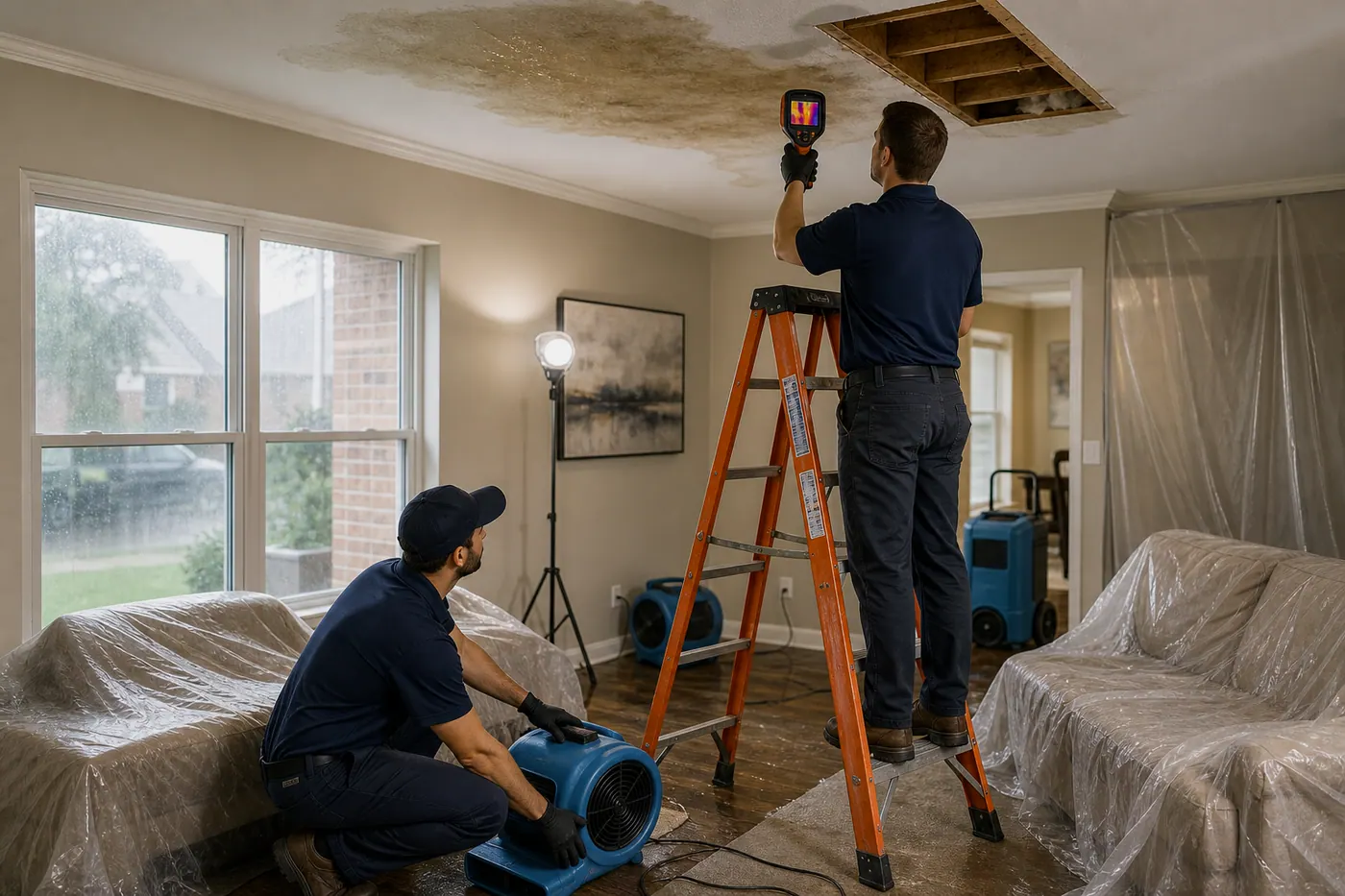
Storm damage should be addressed quickly because roof and ceiling leaks can continue spreading each time rain returns.
Moisture meters, thermal imaging, drying equipment, extraction tools, and containment materials help locate and control storm-related water damage.
Our technicians understand how wind-driven rain, roof leaks, attic moisture, and ceiling saturation affect interior materials.
We document storm-related water damage with photos, readings, and scope notes to support the claim and repair process.
Storm restoration starts with safety and source control, then moves into water removal, drying, and interior repair planning.
Storm damage work often has to account for weather that may not be finished. If more rain is expected, interior drying and temporary protection need to be planned together. We explain which repairs should wait until the entry point is controlled and which mitigation steps can safely begin right away.
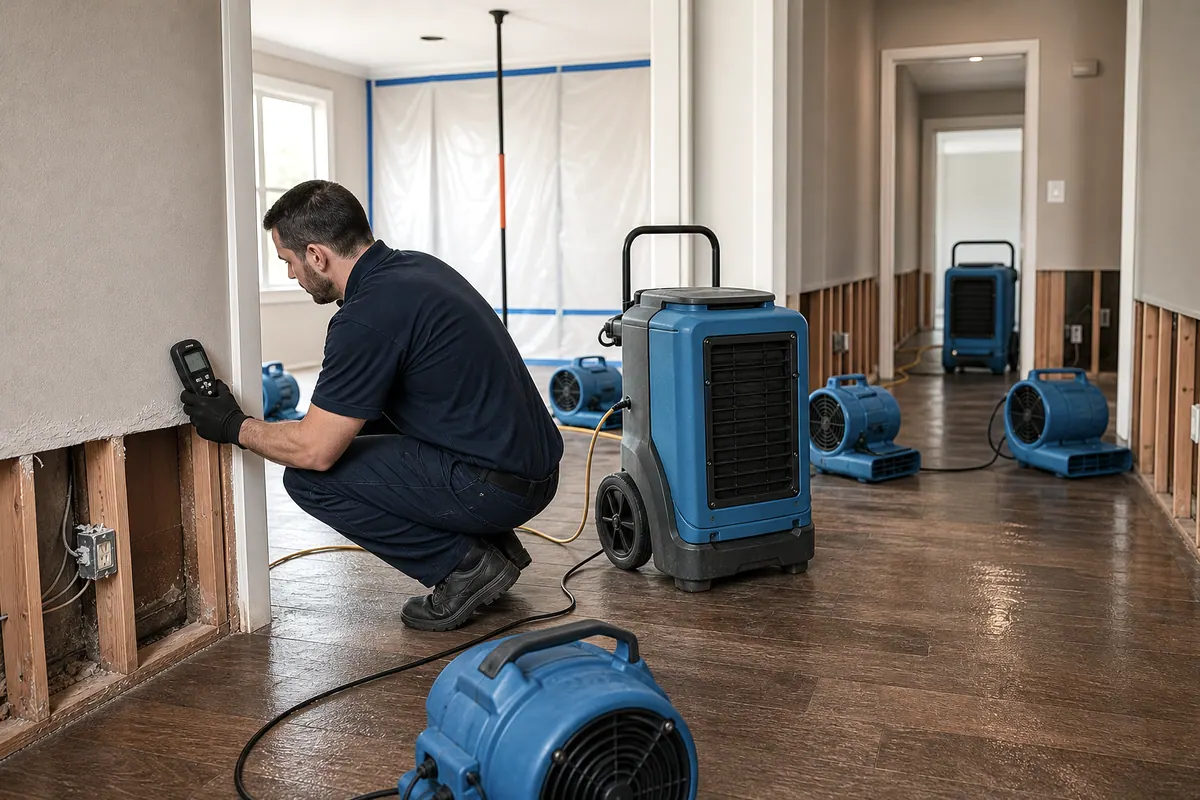
Call as soon as you notice active dripping, ceiling stains, wet flooring, or a musty smell after a storm. If the ceiling is sagging or electrical fixtures are wet, avoid the area until it is assessed.
Storm-related interior water damage may be covered depending on the cause and policy. Roof condition, wind damage, and maintenance details can matter. We document interior damage and moisture conditions clearly.
Yes. Wet insulation, drywall, and attic-adjacent materials can support mold growth if they remain damp. Drying and moisture checks are important after storm water enters the structure.
If a storm has pushed water into your McKinney property, call for interior restoration support. We can help locate moisture, dry affected materials, and document the damage. We will help stabilize the interior damage, track hidden moisture, and prepare the affected rooms for proper repair.