Water on hardwood floors needs fast, careful drying. Our McKinney hardwood floor drying team checks moisture levels, removes surface water, manages airflow and humidity, and helps determine whether the floor can be saved or needs repair.
Tell us when the floor got wet, what type of water caused it, and whether boards are cupping, buckling, or darkening. We will help you plan the next step.
Hardwood reacts to water differently than carpet or tile. Moisture can enter between boards, under finish, into the subfloor, and along walls. If drying is too slow, boards may cup, crown, buckle, stain, or separate. If demolition happens too early, salvageable flooring may be removed unnecessarily. Moisture readings guide the decision.
Hardwood floors in McKinney homes often connect through open living areas, kitchens, and hallways. Water can travel along seams and under trim, so we check beyond the first wet boards before deciding how far drying or repair should extend.
We inspect the water source, wood condition, installation type, affected square footage, and subfloor moisture. Engineered wood, solid hardwood, laminate, and wood-look products all respond differently. The right approach may involve extraction, mat drying when appropriate, dehumidification, air movement, baseboard removal, and ongoing moisture monitoring.
As your trusted Property Damage Restoration Experts, we are dedicated to protecting your property and ensuring complete recovery.
Hardwood drying takes patience. A floor may look better before moisture levels are truly acceptable. We track readings over time and look for signs of trapped moisture under boards or along edges. If boards are severely buckled, contaminated, or structurally compromised, we explain repair options instead of forcing a drying plan that will not hold up.
The source of the water matters for hardwood. Clean water from a supply line may allow more drying options, while contaminated water or long exposure can change the recommendation. We also consider the age of the floor, finish condition, board movement, and whether moisture reached the subfloor. That full picture helps you decide whether drying, refinishing, partial replacement, or full replacement is the most practical path.
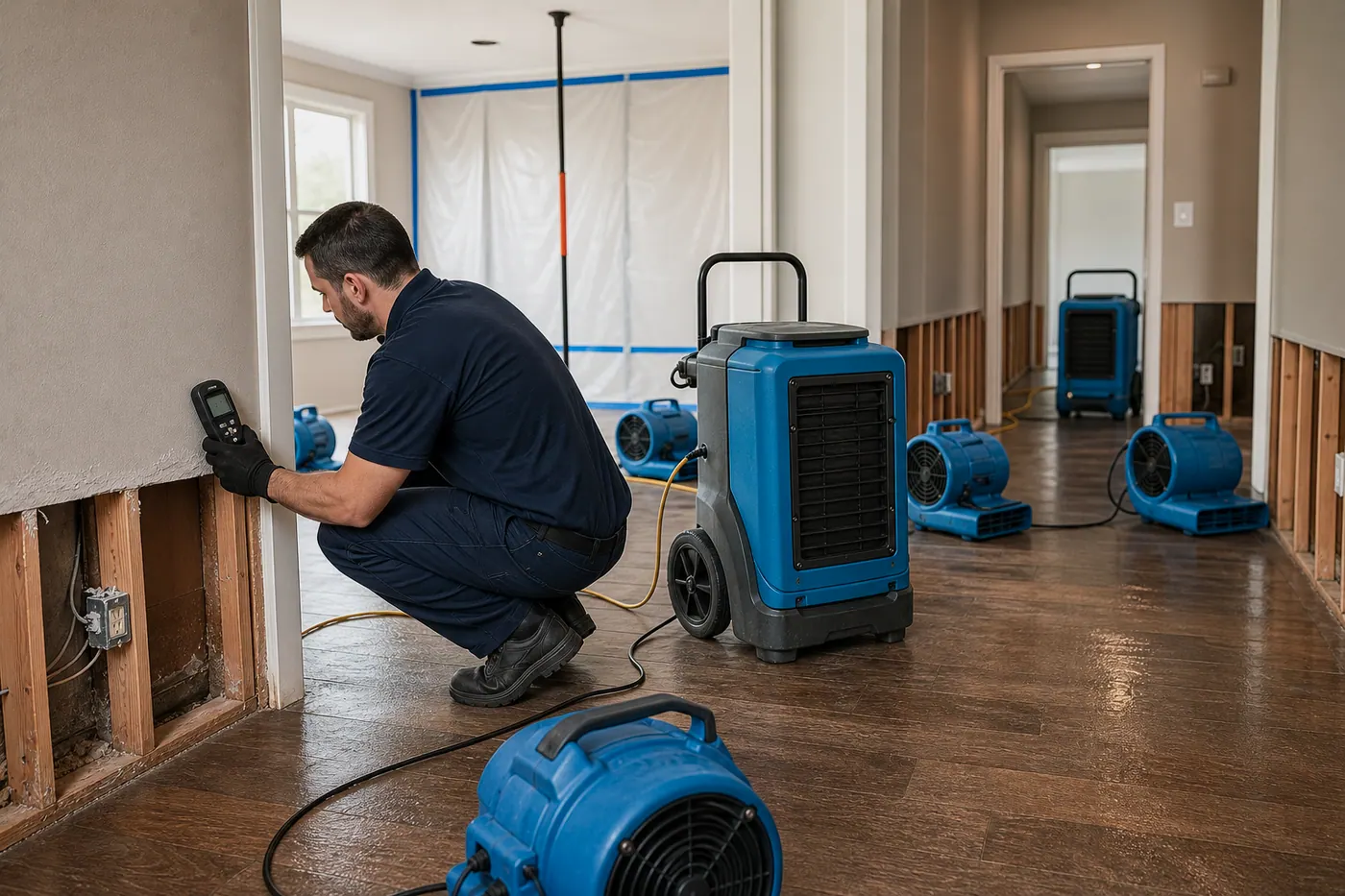
Fast action matters because hardwood can absorb moisture through seams, edges, and the underside of boards.
Extraction tools, air movers, dehumidifiers, moisture meters, and specialized drying methods are used based on floor type and severity.
Our technicians understand cupping, buckling, finish damage, subfloor moisture, and the limits of drying different wood products.
Moisture readings and photos help document the condition of the floor before, during, and after drying for insurance review.
Hardwood floor drying starts with water removal and moisture mapping, then moves into controlled drying and a repair decision based on readings.
Hardwood drying decisions are made over time because wood can continue moving as moisture levels change. We watch for cupping, crowning, gapping, and subfloor moisture before making repair recommendations. That patience helps avoid refinishing or replacing boards before the floor has stabilized.
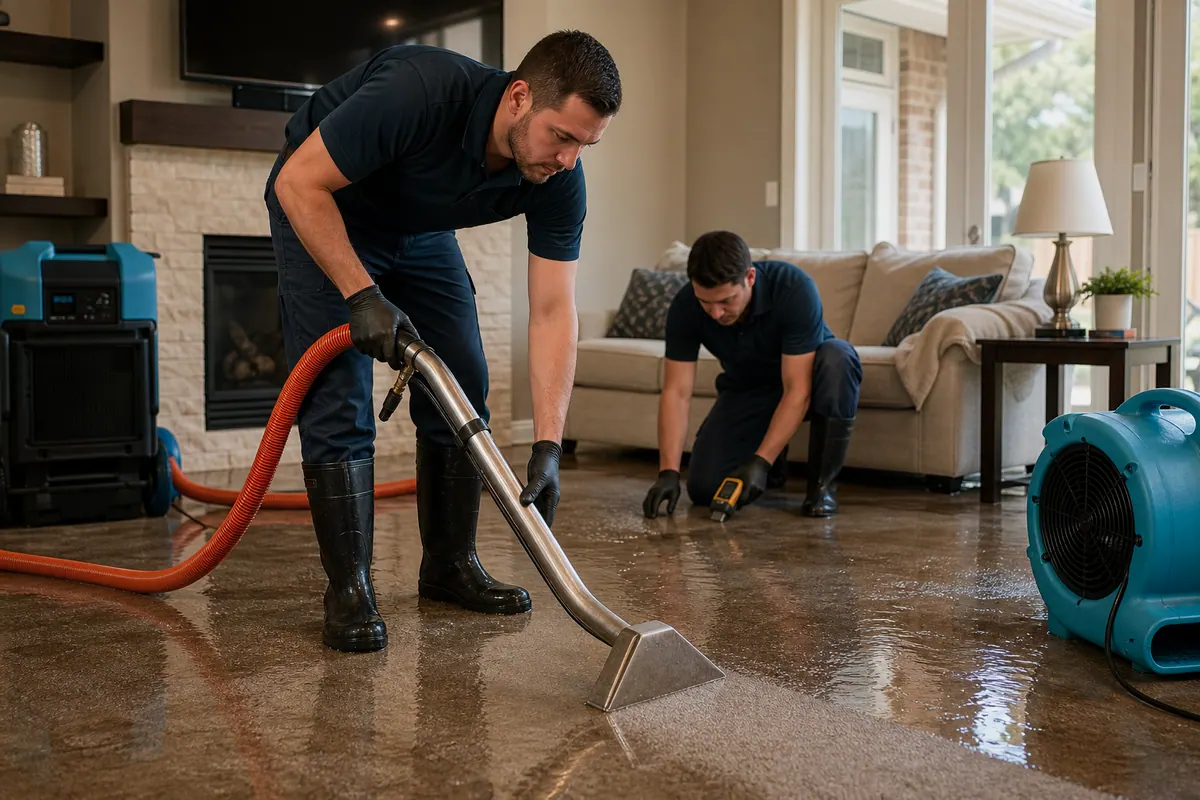
Call as soon as hardwood gets wet. Even if water is wiped up, moisture may already be between boards or under the flooring, especially near walls and transitions.
Insurance may cover hardwood drying or repair when the water loss is sudden and covered. Photos, moisture readings, and flooring condition notes help support the review.
Yes. Moisture trapped under hardwood can affect the subfloor and create mold risk. Drying must address what is underneath, not only the finished surface.
If hardwood flooring is wet, cupping, or buckling in your McKinney property, call before the damage gets worse. Early drying can preserve more options. We will check moisture below the surface and explain whether drying or repair gives the floor the best chance of recovery. We will also review board movement and subfloor readings before recommending refinishing or replacement. That gives you a better basis for deciding whether the floor is worth saving.