Water damage can move fast through flooring, drywall, trim, cabinets, and insulation. Our McKinney restoration team responds 24/7 with extraction equipment, moisture meters, air movers, and dehumidifiers to stop the spread, dry the structure properly, and guide the cleanup from the first inspection through the final repair plan.
Tell us what happened, where the water is coming from, and how much of the property is affected. We will help you decide the safest next step and dispatch a restoration crew to your McKinney property.
Water damage restoration is more than removing visible water. A proper restoration plan identifies the source, classifies the water, maps hidden moisture, dries affected materials, and documents the job for insurance review. In McKinney homes and businesses, quick drying is especially important because warm weather and humidity can turn a small leak into swollen trim, damaged flooring, and mold risk within a short window.
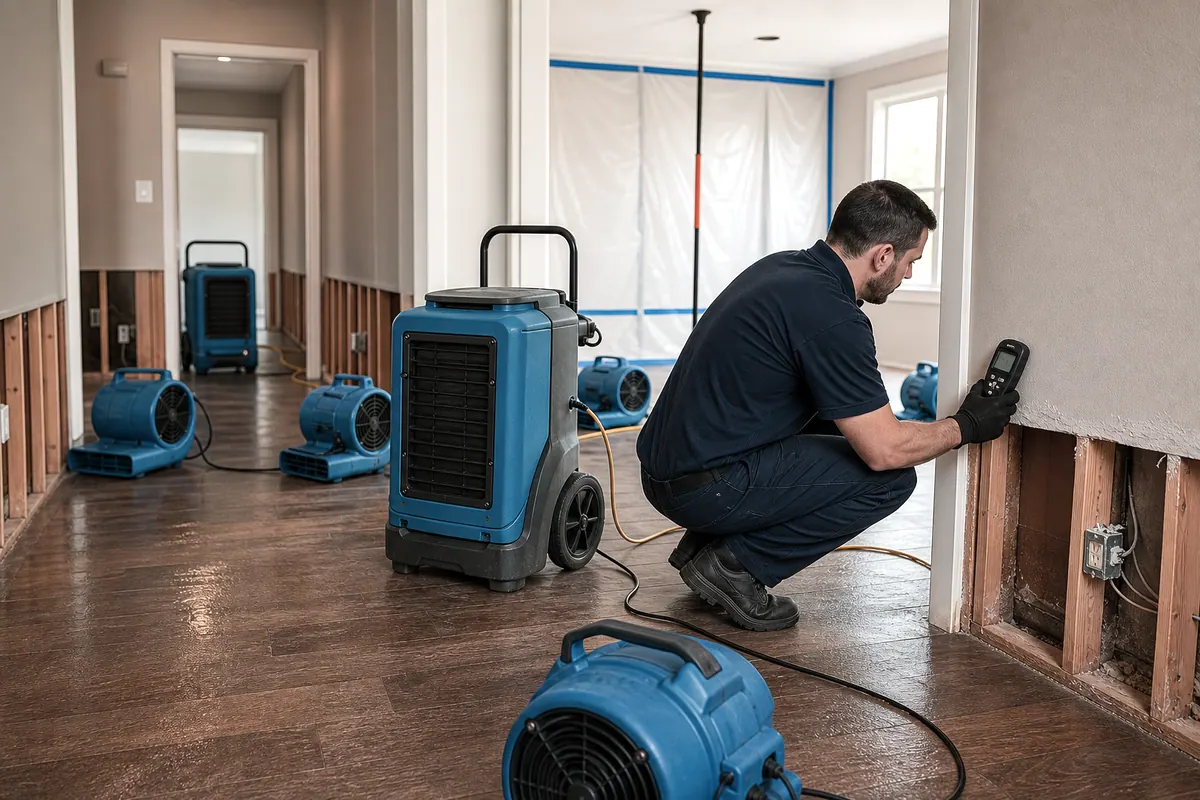
A strong restoration job starts with an honest assessment. We check walls, floors, baseboards, cabinets, crawl spaces, and nearby rooms because water rarely stays in one place. Moisture can travel under vinyl plank, behind drywall, beneath carpet pad, and into subflooring long after the surface looks clean. Our technicians use moisture meters and thermal imaging to understand the full path of the damage before equipment is placed.
As your trusted Water Extraction and Cleanup Experts, we are dedicated to protecting your property and ensuring complete recovery.
The goal is to save what can be saved and remove what cannot be dried safely. That may include extracting standing water, lifting carpet, removing wet pad, opening limited wall sections, setting drying equipment, applying antimicrobial treatment when appropriate, and tracking moisture readings until materials return to acceptable levels. This careful approach helps reduce unnecessary demolition while protecting the structure from long-term damage.
Restoration also protects the decisions that come later. If moisture readings show that drywall, flooring, or trim can dry safely, we can often limit demolition. If a material is too saturated or contaminated, removal may be the better long-term choice. That judgment matters for McKinney homeowners who want the home dry and usable again without paying for unnecessary tear-out. It also matters for businesses that need a clear timeline, fewer surprises, and documentation that explains why each step was taken.
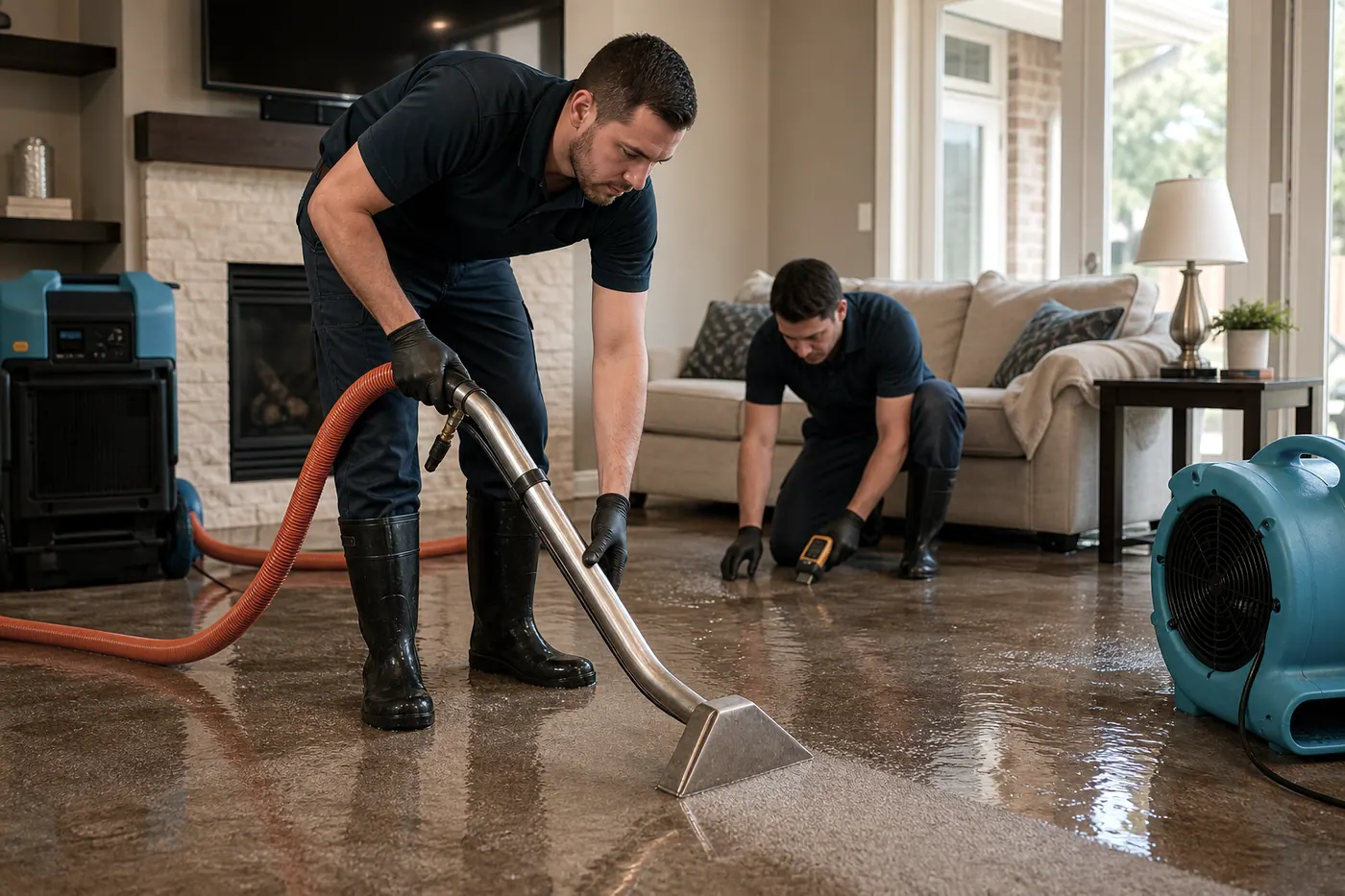
Water damage gets more expensive when it sits. We prioritize active leaks, standing water, wet flooring, and ceiling leaks so the most urgent risks are addressed first.
Our crews use professional extractors, air movers, LGR dehumidifiers, moisture meters, and thermal imaging to dry beyond the surface and verify progress each day.
You get technicians who understand water categories, drying classes, containment, material removal, and documentation standards used on real restoration jobs.
Insurance carriers need clear photos, readings, scope notes, and timelines. We organize that information so the claim conversation is less confusing.
Every property is different, but a clear process keeps the job controlled. We focus on stopping the source, removing water, drying hidden moisture, and documenting each step so the work is practical and defensible.
Most emergency calls in McKinney can be dispatched quickly, and active water situations are treated as urgent. Arrival depends on weather, traffic, and crew availability, but the first call should happen as soon as you notice standing water, wet walls, or a ceiling leak.
Many policies cover sudden and accidental water damage, such as a burst supply line or appliance failure. Gradual leaks, flooding from outside, and maintenance issues may be handled differently. We document the damage clearly so your adjuster has the details needed to review the claim.
Yes. Mold can begin developing when moisture remains trapped in drywall, wood, carpet, or insulation. Fast extraction helps, but the real protection comes from measuring hidden moisture and drying the structure fully instead of relying on surfaces that only feel dry to the touch.
If water is spreading, flooring is wet, or you are unsure how far the damage reached, call our McKinney team. We will help you stabilize the situation and begin a documented restoration plan. You will get clear guidance on what should happen first, what can wait, and what needs to be documented before repairs begin.