Structural drying removes moisture from the materials that hold your property together. Our McKinney drying team uses moisture readings, air movement, and dehumidification to dry walls, floors, framing, and cavities after water damage.
Tell us what materials are wet and when the water damage happened. We will help determine whether drying equipment and moisture monitoring are needed.
Structural drying is the controlled process of moving moisture out of building materials. It is different from simply placing fans in a room. Proper drying considers material type, moisture level, humidity, temperature, airflow, and the path water took through the structure. Without this step, walls and floors may look normal while hidden moisture remains.
Local humidity can slow natural drying, especially when moisture is trapped in wall cavities, subfloors, or cabinets. That is why drying in McKinney properties should be measured, adjusted, and verified instead of left to room fans alone.
We use moisture meters to check drywall, wood, subflooring, baseboards, cabinets, and other affected materials. Drying equipment is placed to create evaporation and remove humidity from the air. As the job progresses, readings show whether materials are drying as expected or whether limited removal is needed to open trapped moisture.
As your trusted Water Emergency Response Experts, we are dedicated to protecting your property and ensuring complete recovery.
Structural drying can help save materials when it is started early and monitored properly. It can also prevent repairs from being installed over damp surfaces. For McKinney property owners, this matters because humidity can slow natural drying and increase the risk of odors, swelling, and mold growth if moisture is left inside the structure.
Drying decisions should be based on readings over time, not a single visual check. Some materials release moisture quickly, while others dry slowly because of coatings, cavities, insulation, or limited airflow. We adjust equipment placement as readings change and explain when selective removal is needed to reach trapped moisture. This prevents the two common problems after water damage: stopping drying too soon or tearing out materials that could have been saved.
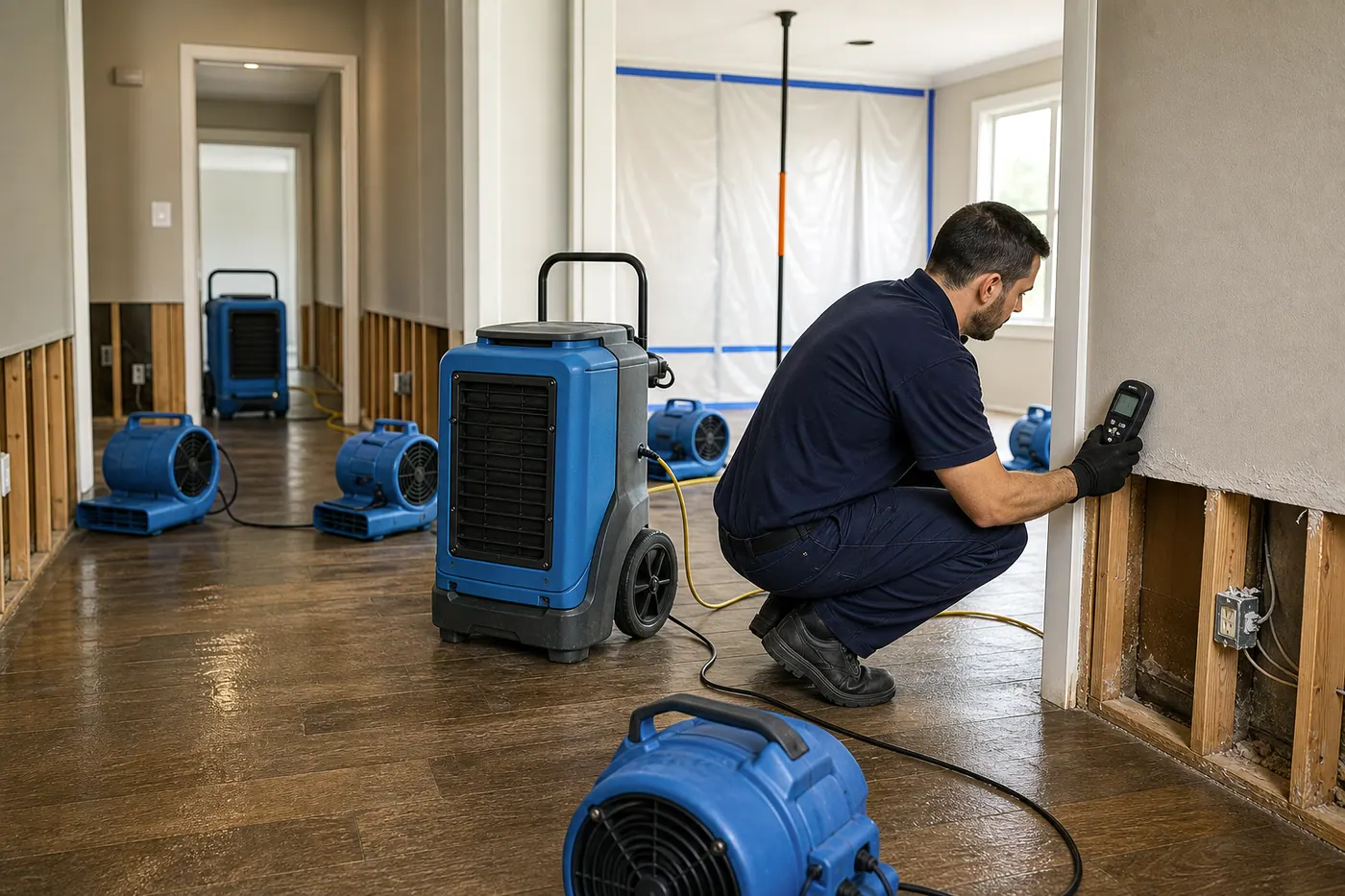
Drying should begin soon after extraction so trapped moisture does not sit inside walls, floors, trim, and framing.
We use air movers, LGR dehumidifiers, moisture meters, thermal imaging, and drying logs to manage the environment and track progress.
Our technicians understand drying goals for different materials, including drywall, wood, concrete, carpet, insulation, and cabinetry.
Daily or scheduled readings provide a record of progress and help support insurance documentation for drying equipment and labor.
Structural drying works best when it follows a measured plan. We inspect, remove bulk water, set equipment, monitor progress, and confirm repair readiness.
A drying plan can change as materials respond. If readings improve, equipment may be adjusted to focus on slower areas. If readings stall, we look for trapped moisture, vapor barriers, insulation, or layered materials that may need a different approach. That ongoing review is what makes structural drying reliable.
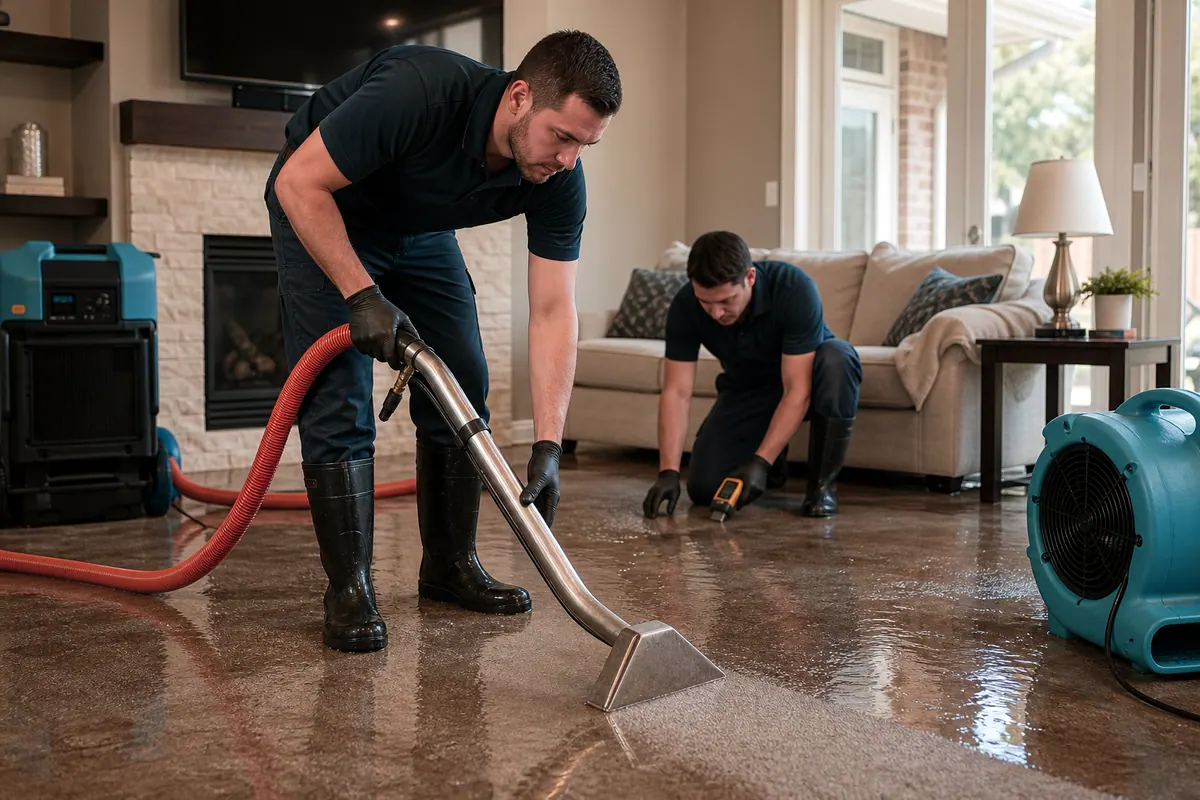
Drying should start as soon as standing water is removed and safety concerns are addressed. Waiting allows moisture to settle deeper into wood, drywall, and subfloors, making drying slower and more disruptive.
Insurance often reviews drying as part of covered water mitigation when the water loss is covered. Equipment logs, moisture readings, and photos help show why drying was needed and how long it ran.
Yes. Structural drying is one of the main ways to reduce mold risk because it targets moisture that remains inside building materials after visible water is gone.
If your walls, floors, or framing may still be wet, call for structural drying in McKinney. We can measure moisture and set a drying plan before repairs begin. We will measure the affected materials, set drying goals, and confirm when the area is ready for repairs.