Lower-level spaces present unique water damage challenges. Our McKinney team handles pumping, extraction, humidity control, and drying for flooded basements, utility rooms, and below-grade areas.

Not every McKinney home has a traditional basement, but many have lower-level spaces — utility rooms, partially below-grade areas, walk-out basements, and storage spaces that sit lower than the main floor. These areas are vulnerable to water intrusion from heavy rain, plumbing failures, sump pump issues, and groundwater pressure.
Our experienced water removal specialists in McKinney provide submersible pumping and heavy-duty dehumidification for below-grade areas.
When water collects in a lower-level space, gravity works against you. Water settles at the lowest point and may not drain on its own. Mechanical equipment — water heaters, HVAC systems, electrical panels — often sits in these areas, creating safety concerns and potentially compounding the damage.
In McKinney and surrounding Collin County, the most common causes of lower-level water include sump pump failures or overflow during heavy rain, exterior drainage problems that direct surface water toward the foundation, plumbing failures in utility lines, water heater ruptures, and HVAC condensation issues. Identifying the source is essential because it determines whether the water is clean, gray, or potentially contaminated, which affects how cleanup and drying are handled.
If standing water is near an electrical panel, breaker box, or plugged-in equipment, do not enter the area. Have the power disconnected by a qualified electrician before anyone enters the flooded space. This is not optional — it is a critical safety step.
Once the area is confirmed safe, we deploy pumps to remove standing water. After bulk water is out, extraction equipment removes remaining surface moisture from concrete, flooring, and affected materials. Contents are moved to dry areas when possible.
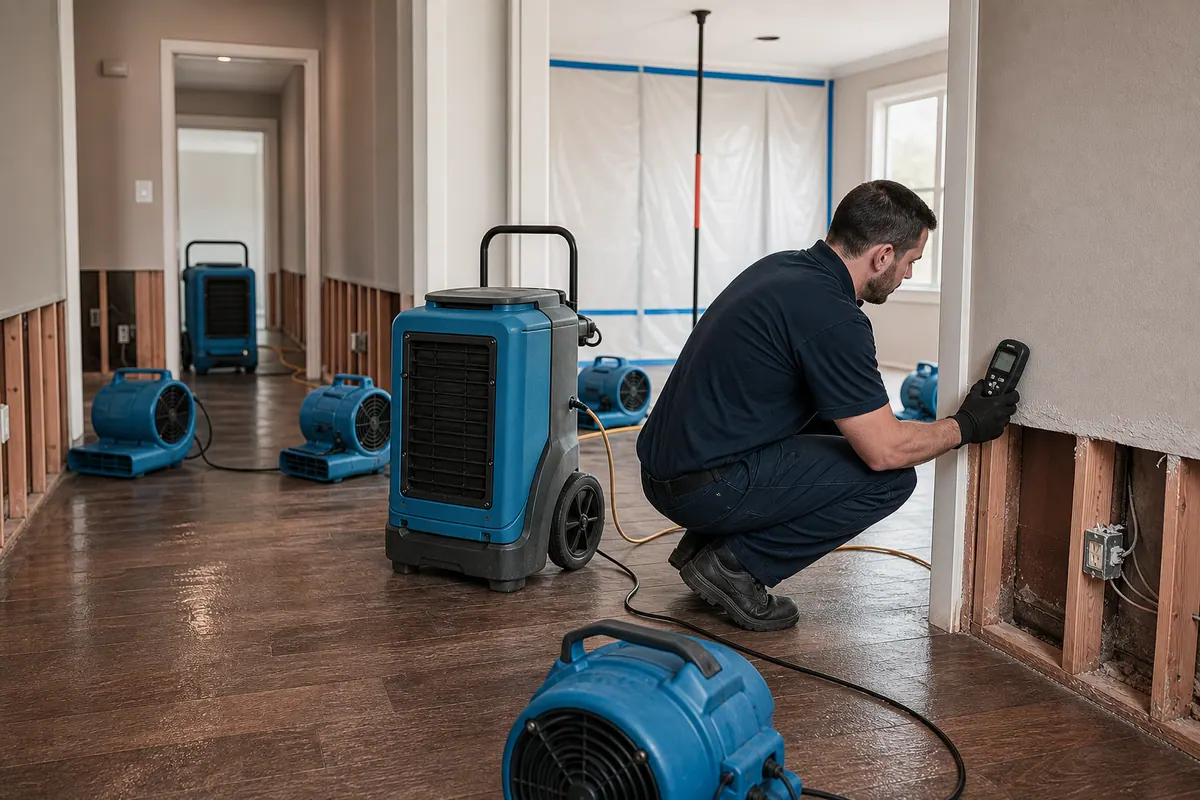
Lower-level spaces are naturally more humid and have less air circulation than upper floors. This means drying takes deliberate effort — dehumidifiers and air movers are essential to pull moisture from concrete, framing, and flooring materials. We monitor moisture readings throughout the process and adjust equipment as the space dries.
If water entered from an exterior source, addressing the underlying drainage or waterproofing issue is important for long-term protection. While exterior waterproofing and drainage work is outside our restoration scope, we can identify the likely entry point and recommend consultation with the appropriate trade.
If your McKinney property has water in a lower-level space, call us for safe, professional removal and drying.
Below-grade spaces require specialized attention to safety, extraction, and humidity control.
We verify electrical safety before entry. If water is near panels or equipment, we coordinate power disconnection before any work begins.
Submersible pumps remove standing water. Extraction equipment handles remaining surface moisture on concrete, flooring, and materials.
Dehumidifiers and air movers address the elevated humidity typical in lower-level spaces. Moisture is monitored until materials reach safe levels.
We identify the likely water source and entry point. If drainage or plumbing repair is needed, we recommend the appropriate trade for follow-up.
Lower-level spaces often contain electrical panels and equipment. We ensure the area is safe before entry and coordinate with electricians when needed.
Below-grade areas hold humidity longer than upper floors. Professional dehumidification is essential to prevent stalled drying and secondary damage.
Water heaters, HVAC systems, and other equipment in lower levels need evaluation. We protect and assess these systems during the removal process.
Is the water from a plumbing failure, sump issue, or exterior drainage? Knowing the source affects cleanup protocol and long-term prevention.
Traditional full basements are not common in McKinney due to the clay soil and shallow water table. However, many homes have lower-level utility spaces, walk-out basements, or partially below-grade rooms that can flood during heavy rain or plumbing failures.
If the area is safe from electrical hazards and the water is from a clean source, small amounts can be handled with a wet/dry vacuum. For significant standing water, professional pumps remove water faster and more completely, and professional drying prevents secondary damage.
Lower-level spaces typically take longer to dry than upper-floor rooms due to higher ambient humidity and less air circulation. Expect several days of monitored dehumidification. The exact timeline depends on the area, materials, and water source.
If the water source is addressed — a plumbing repair, sump pump restoration, or drainage correction — recurrence is unlikely. If the source is exterior drainage, you may need a waterproofing or grading assessment from an appropriate specialist.
Do not enter a flooded space until electrical safety is confirmed. Call our McKinney team for safe, professional water removal and drying.