A burst pipe can release hundreds of gallons before you notice it. Our McKinney team helps you shut off the water, extract what has spread, dry wall cavities and flooring, and coordinate plumbing repair.

Supply-line breaks, frozen pipe failures, and corroded fittings can release a large volume of water in a short time. The damage often extends far beyond where the pipe actually failed — water travels through wall cavities, along framing, between floors, and into rooms well away from the source.
Our McKinney emergency water restoration company coordinates water shutoff, cavity drying, and moisture extraction to minimize long-term structural impact.
McKinney properties are vulnerable to occasional winter freezes that can cause pipes in exterior walls, attics, and garages to burst. Supply-line connections behind toilets, under sinks, and feeding washing machines and dishwashers are also common failure points year-round.
If you discover a burst pipe, the most important step is shutting off the water supply. The main shutoff is typically located near the water meter or where the line enters the home. If the burst is in a specific fixture, a local shutoff valve may stop the water without affecting the entire house. If standing water is near electrical outlets or panels, do not enter the area until the power is safely disconnected.
Once the water stops flowing, call for cleanup and plumbing repair. We coordinate with qualified plumbers when pipe repair is needed — our focus is on the water damage, extraction, drying, and documentation.
Water from a burst pipe rarely stays in one room. It travels along pipes, through wall cavities, underneath flooring, and behind cabinets. Tracing the full path is essential because hidden moisture left untreated leads to long-term damage, even after surface water is gone.
After the plumbing repair is completed or the supply is shut off, we begin extracting standing water and checking the path the water traveled. Walls near the burst point are inspected with moisture meters to determine how far water penetrated. Cabinets below sinks, toe kicks, and insulation behind walls may need to be opened for drying access.
If the pipe burst was in an upper floor or attic, water may have traveled down through ceiling cavities and into rooms below. Ceiling damage from pipe failures requires careful evaluation before repairs begin.
While McKinney winters are generally mild, occasional hard freezes can catch property owners off guard. Pipes in unconditioned spaces — attics, exterior walls, garages, and crawl spaces — are most vulnerable. When these pipes freeze and then thaw, the resulting break can release water while no one is home, causing extensive damage before the problem is discovered.
If you are dealing with a burst pipe in your McKinney property, call us for extraction, drying, and documentation while your plumber handles the repair.
Pipe failures require coordination between plumbing repair and water damage cleanup.
We help you locate and shut off the water supply if you have not already. Electrical safety near standing water is assessed before entry.
If the pipe needs repair, we coordinate with a qualified plumber. Our cleanup begins once the water source is controlled.
Standing water is extracted. Walls, ceilings, and cabinets near the burst point are inspected to trace the full water path.
Air movers and dehumidifiers target wall cavities, subfloors, and affected materials. Moisture readings and photos document the job for insurance.
We work alongside plumbers to ensure the pipe is repaired and the water damage is addressed — both are needed for full recovery.
Pipe failures push water into wall cavities, between floors, and behind cabinets. We trace the full path to find moisture that is not visible.
McKinney occasionally gets hard freezes. We understand how freeze-related bursts cause damage in attics, exterior walls, and unconditioned spaces.
Burst pipe events are typically covered by homeowner insurance. We provide the photos, readings, and scope notes adjusters need for review.
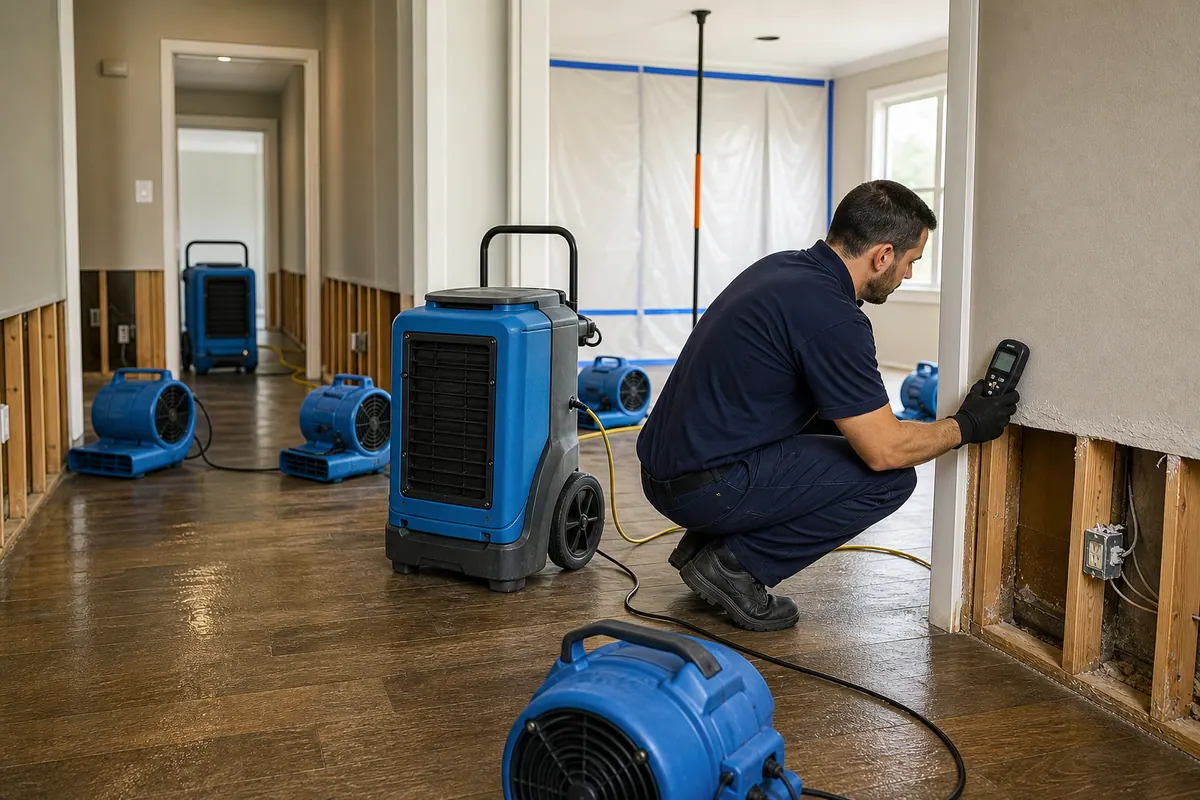
We focus on water damage cleanup, extraction, and drying. Pipe repair is handled by a licensed plumber. We coordinate with plumbers to make sure both sides of the job are addressed.
A standard supply line can release several gallons per minute. A pipe that bursts while no one is home — such as during a freeze — can release hundreds or even thousands of gallons before the water is shut off.
Burst pipe damage from sudden and accidental failures is typically covered by standard homeowner policies. Gradual leaks, deferred maintenance, and pipes that fail due to neglect may be handled differently. Documentation helps support your claim.
Yes. A pipe that has temporarily stopped leaking can resume under pressure. Keep the water off until a plumber confirms the repair is complete.
Shut off the water and call our team. We handle the extraction, cavity drying, and documentation while your plumber repairs the pipe.