After floodwater recedes, the cleanup begins. Our team handles debris removal, water extraction, sanitation, and preparation for drying — the critical transition from emergency to recovery.

Flood cleanup focuses on the immediate aftermath — removing water, clearing debris, separating damaged contents from salvageable items, and preparing the space for professional drying. It is the hands-on work that bridges the emergency and the full flood restoration process.
Our team of McKinney flood cleanup specialists handles debris removal, surface sanitation, and rapid drying setup to safeguard your property.
In McKinney, flood events can leave behind mud, standing water, soaked building materials, and displaced contents. Cleanup addresses the visible mess so that the less visible work — moisture mapping, structural drying, and material evaluation — can proceed effectively.
Cleanup begins once the property is confirmed safe. Standing water is pumped or extracted from affected rooms. Debris, damaged furnishings, and unsalvageable materials are carefully removed. Contents that may be cleaned or restored are separated and documented. Surfaces are wiped or rinsed to remove mud and residue, and sanitation is applied where appropriate based on the water source.
Once the space is cleared, we assess what remains — framing, subfloors, concrete, and any materials that were above the water line. This assessment determines what needs to dry, what needs further cleaning, and what the next phase of work will involve.
Cleanup addresses what you can see — debris, water, mud, and damaged materials. Restoration addresses what you cannot — hidden moisture, structural drying, contamination management, and reconstruction. Both are essential, and cleanup must happen first.
Floodwater often leaves behind odors from organic matter, mud, and stagnant water. These odors typically come from materials that absorbed contaminated water and cannot be fully cleaned. Removing the source materials during cleanup is the most effective way to address odors. Masking agents do not solve the underlying problem.
If your McKinney home or business has been affected by flooding, our cleanup team can help you clear the mess, protect what can be saved, and prepare for the recovery ahead.
Structured cleanup sets the stage for effective drying and restoration.
Standing water is extracted using pumps and weighted extractors. We work room by room to ensure thorough removal from all affected areas.
Damaged materials, mud, debris, and unsalvageable contents are carefully removed. We separate items that may be cleanable from those that cannot be saved.
Remaining surfaces are cleaned to remove residue. Sanitation is applied where the water source warrants it, focusing on hard surfaces and structural elements.
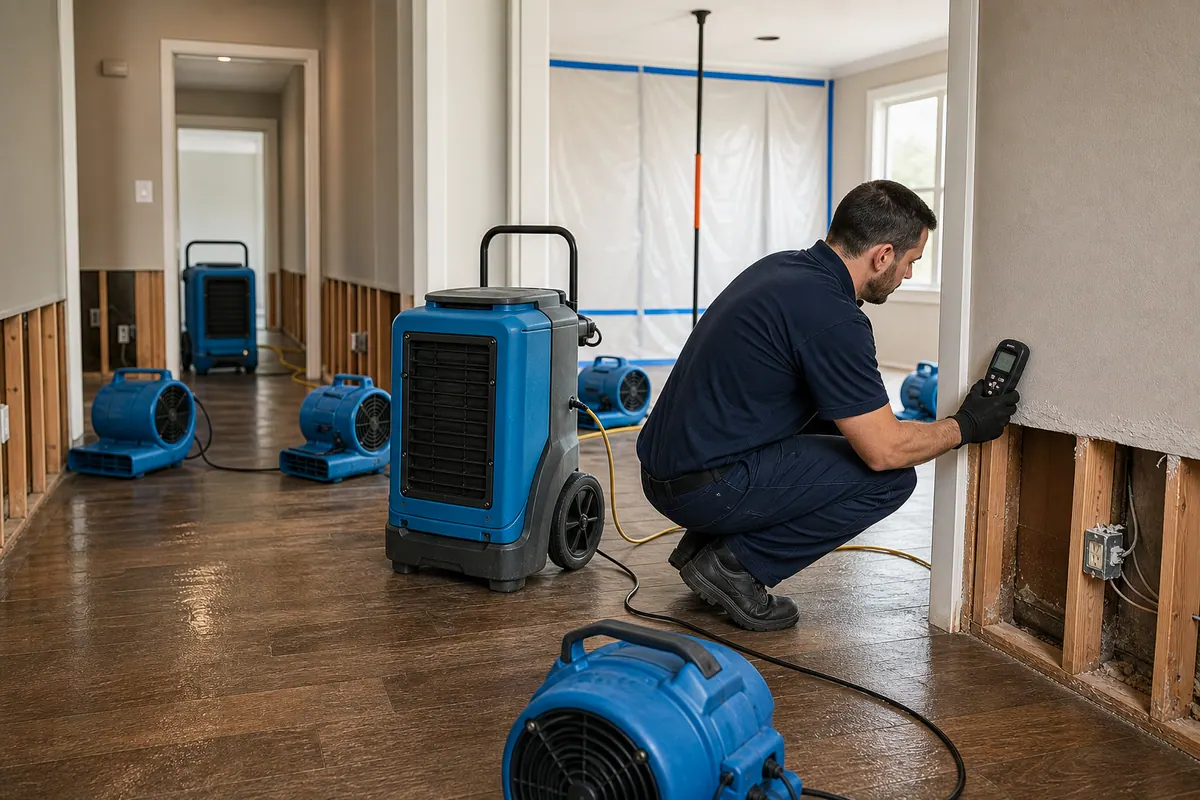
Moisture readings are taken across remaining materials. The space is prepped for structural drying equipment, and findings are documented for the next phase.
Professional cleanup removes materials that homeowners often overlook — wet insulation behind walls, soaked carpet pad, and contaminated materials beneath cabinets.
Contaminated floodwater requires proper cleaning protocols. We address sanitation based on the actual water source, not assumptions.
Salvageable belongings are identified, separated, and documented during cleanup. Early action can save furniture, electronics, and personal items.
Cleanup removes the bulk so drying equipment can work efficiently. Without thorough cleanup, drying takes longer and may not reach hidden moisture.
As soon as the water recedes and the area is safe to enter. Delays allow moisture to absorb deeper into materials and increase the risk of secondary damage. Early cleanup also preserves more contents and simplifies the drying process.
Minor surface cleanup may be manageable, but flood events that involve contaminated water, significant depth, or large areas benefit from professional equipment and protocols. Handling contaminated water without proper protection can pose health risks.
We evaluate each item individually. Hard, non-porous items that can be cleaned are typically separated for restoration. Porous items that absorbed contaminated floodwater may not be salvageable. We document everything and explain our recommendations.
Cleanup prepares the space for drying by removing water and damaged materials. Structural drying is a separate, monitored process that follows cleanup. Both are necessary for complete flood recovery.
Our team handles the heavy work of post-flood cleanup so you can start the path to recovery. Call for a visit and honest assessment of your property.