Water stains, sagging drywall, and dripping ceilings indicate water above. Our McKinney team locates the source, dries the cavity, manages controlled removal when needed, and plans the repair to match your existing finish.

Ceiling water damage is one of the most visible and alarming signs of a water problem. A stain on the ceiling means water is pooling above the drywall surface — and the source could be a roof leak, a plumbing failure on the floor above, an HVAC condensation issue, or water that traveled from a distant origin through framing and ceiling cavities.
Contact our McKinney ceiling leak repair and restoration team to safely drain overhead water, dry attic insulation, and restore ceiling drywall.
In McKinney, ceiling damage is common after severe storms, upstairs bathroom overflows, HVAC drain line clogs, and supply-line failures that go unnoticed for hours. The key to proper ceiling repair is finding and fixing the source, drying the cavity above the ceiling, and then — only then — repairing the drywall, texture, and paint.
Painting over a water stain without addressing the moisture above it is a common mistake that leads to recurring stains, mold growth in the cavity, and eventually drywall failure. Before any cosmetic repair begins, the moisture source must be stopped and the ceiling cavity must be verified dry.
A sagging or bulging ceiling indicates trapped water weight. Do not stand directly beneath it. The drywall can release suddenly, dropping water and material without warning. Keep people and pets away from the area and call for professional assessment.
Our team starts by identifying the water source. We check the roof above, plumbing in the ceiling cavity, HVAC condensation lines, and the room directly above for signs of a leak or overflow. Once the source is controlled, we assess the ceiling itself — checking for saturated insulation, wet framing, and drywall integrity.
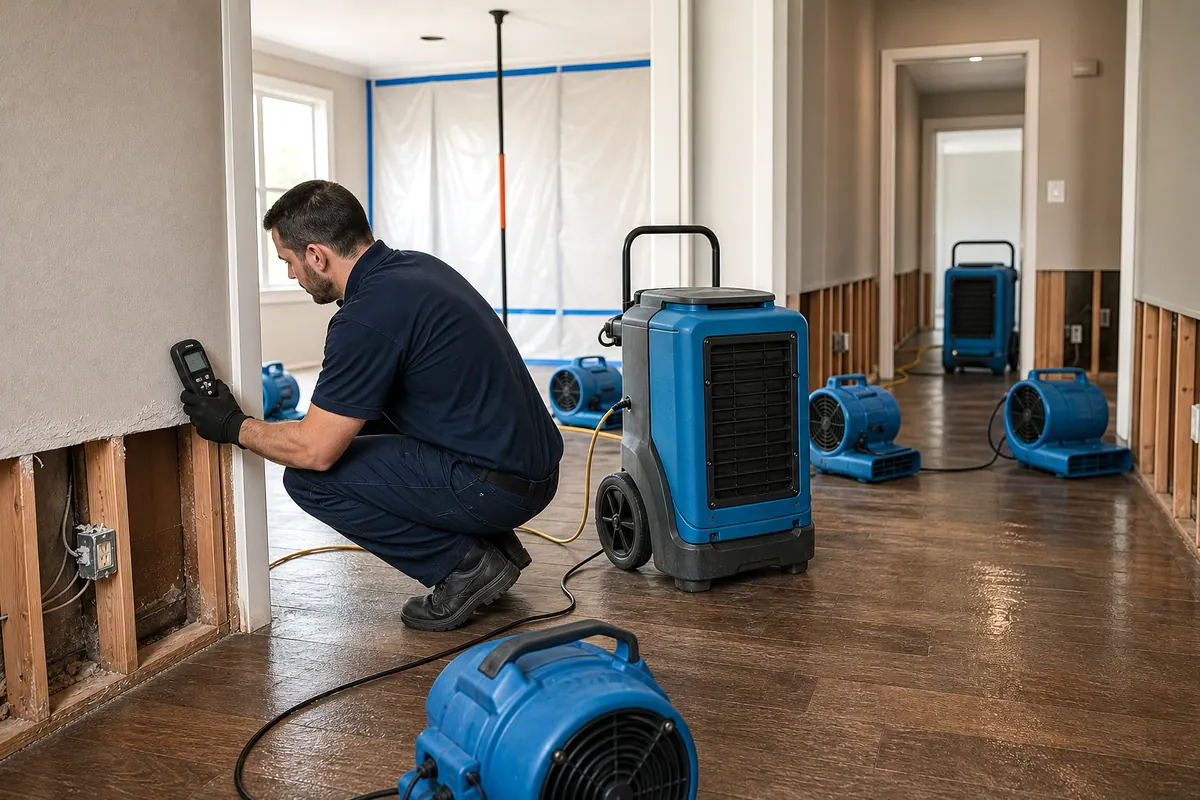
If the drywall is intact and moisture readings indicate it can dry in place, we may use targeted airflow and dehumidification to dry the cavity without removal. If the drywall is compromised — sagging, delaminated, or heavily saturated — controlled removal allows access for cavity drying, insulation evaluation, and inspection of the framing above.
After verified drying, new drywall is installed, textured to match the surrounding ceiling, and painted. Texture matching is important — McKinney homes use various ceiling textures including knockdown, orange peel, smooth, and popcorn. We match the existing pattern so the repair blends seamlessly.
If you notice a water stain, drip, or sag on your ceiling, call us before painting or patching. A proper repair starts above the surface.
Ceiling repair starts with finding the source and drying the cavity — not with paint and texture.
We trace the water to its origin — roof leak, plumbing failure, HVAC issue, or overflow from above. The source is stopped or referred to the appropriate trade.
The ceiling cavity is inspected for wet insulation, damaged framing, and trapped moisture. Drying equipment targets the cavity until verified dry.
Damaged drywall is removed where necessary. Insulation that is saturated or contaminated is replaced. Framing is checked for structural integrity.
New drywall is installed and textured to match the existing ceiling. Paint is applied so the repair blends with the surrounding surface.
Ceiling stains rarely appear directly below the leak. We trace the water path through cavities and framing to find the actual origin.
The space above the ceiling holds moisture that must be dried before any repairs. Closing up a wet cavity guarantees future problems.
McKinney homes have different ceiling textures. We match knockdown, orange peel, smooth, and other patterns for a seamless repair.
If the source is a roof leak or plumbing failure, we coordinate with roofers or plumbers to ensure the source is fixed before repairs begin.
We strongly recommend against it. A stain means moisture was — or still is — present above the drywall. Painting over it without addressing the source and verifying the cavity is dry often leads to recurring stains, mold growth, and material failure.
We assess the existing texture pattern — knockdown, orange peel, smooth, popcorn, etc. — and replicate it on the repaired area. When done properly, the patch blends with the surrounding ceiling and is difficult to distinguish.
Yes. A sagging ceiling indicates trapped water weight above the drywall. The drywall can release without warning. Stay away from the area and call for professional assessment before anyone enters the room.
The timeline depends on the source of the water, the extent of cavity drying needed, and the size of the repair. Simple repairs may take a few days including drying. Complex situations involving roof leaks or multi-room drying may take longer.
Do not paint over the problem. Call our team to find the source, dry the cavity, and repair your ceiling properly so the fix lasts.