Standing water needs to come out now. Our McKinney emergency removal team focuses on fast extraction, source control, initial stabilization, and a smooth transition to monitored drying and full restoration.

Emergency water removal focuses on one thing: getting standing water out of your property as fast as safely possible. It is the immediate response to an active water event — distinct from the broader restoration process and the ongoing mitigation work that follows. When you have water on your floors, in your carpet, or pooling in rooms, removal is the first priority.
Count on our rapid water extraction experts in McKinney for immediate dispatch, standing water extraction, and structural stabilization.
In McKinney, the most common scenarios requiring emergency water removal include burst supply lines, appliance failures, water heater ruptures, overflowing fixtures, and storm-driven water entry. In each case, the volume and spread of water demand professional extraction equipment rather than household tools.
Our team arrives with pumps, extractors, and moisture detection tools. The first step is controlling the water source — shutting off the supply, coordinating with a plumber, or applying temporary measures to stop additional water from entering. Once the source is managed, extraction begins immediately.
We do not just extract the obvious standing water. We check adjacent rooms, hallways, closets, and areas behind furniture and appliances where water may have traveled. Moisture readings confirm whether nearby rooms have been affected even if they appear dry on the surface.
Emergency removal gets the water out. Structural drying removes the absorbed moisture from materials. Restoration repairs and rebuilds. All three are needed for complete recovery, and they happen in sequence. Our emergency removal work transitions directly into the next phases.
Every hour that standing water remains, it absorbs deeper into carpet pad, subfloors, drywall, and baseboards. In McKinney's warm conditions, this absorption accelerates. Water that might be limited to the surface layer in the first few hours can reach the subfloor and wall cavities by the next morning. Fast removal keeps the scope smaller and the recovery faster.
After the water is extracted, we take initial moisture readings and place drying equipment to begin addressing the moisture that materials already absorbed. This seamless transition from removal to drying ensures no time is wasted between steps.
If you can see standing water on your floors, feel wet carpet, notice water spreading from a room, or hear water running where it should not be, those are signals for emergency removal. Do not wait to see if it stops or try to handle large volumes with towels and mops. Professional extraction removes water faster, reaches hidden areas, and sets up the conditions for proper drying.
Call our McKinney team for emergency water removal — we will guide you on safe steps while we dispatch a crew.
Fast, focused extraction followed by a seamless transition to drying.
We stop the water from entering when safely possible. If a plumber is needed, we coordinate that step alongside extraction.
Professional pumps and extractors remove standing water from all affected areas — including hidden pockets along edges, under furniture, and in adjacent rooms.
We trace where water traveled beyond the obvious area. Moisture readings confirm whether hallways, closets, and nearby rooms need attention.
Initial drying equipment is placed based on moisture readings. The job transitions seamlessly into monitored structural drying with no gaps in coverage.
The faster water is removed, the less it absorbs into subfloors, walls, and materials — reducing the overall scope and cost of restoration.
We check beyond the obvious wet areas — edges, transitions, adjacent rooms, and hidden pockets that household tools miss.
Emergency removal flows directly into structural drying without delays. Documentation and moisture data carry forward to the next phase.
While our crew is en route, we provide safe steps you can take immediately — shutting off water, protecting belongings, and avoiding hazards.
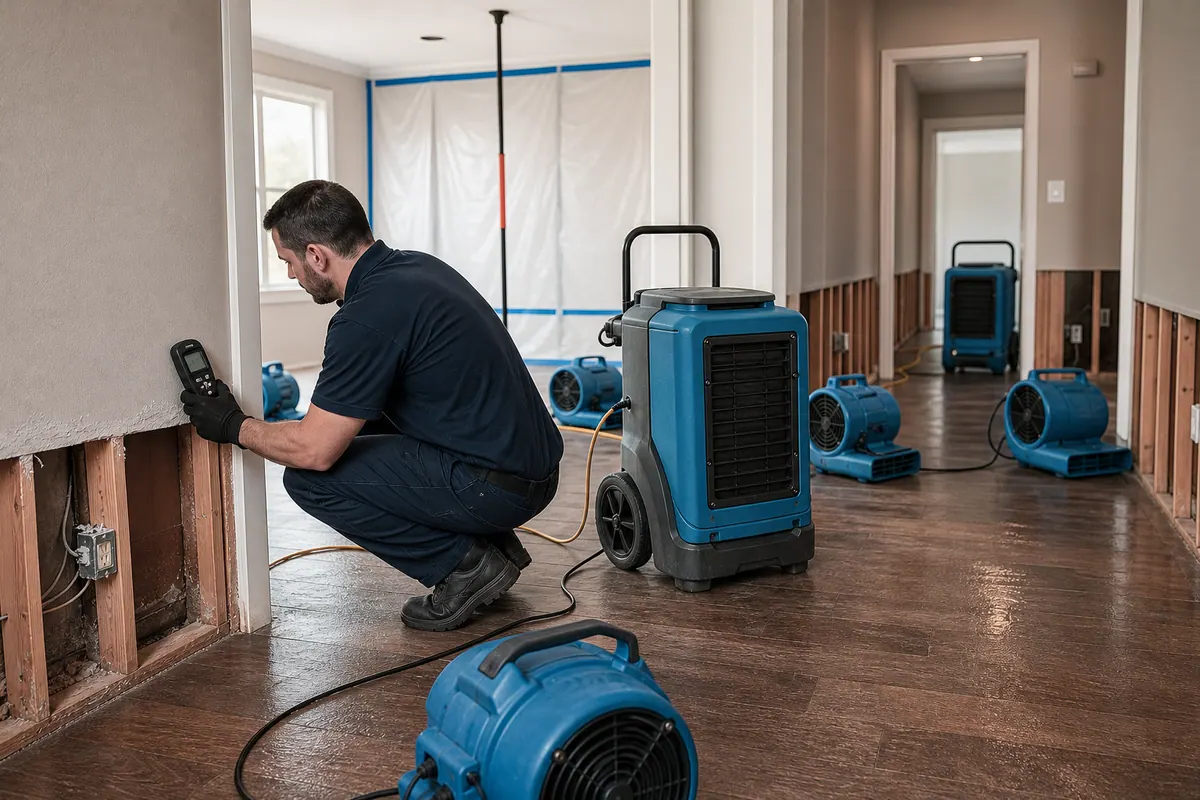
Emergency removal emphasizes speed and response for active, urgent water situations. Water extraction is a step within that process focused on the physical removal of water. In practice, emergency removal includes extraction plus source control, safety assessment, and transition to drying.
If you can safely shut off the water supply, do so. Move valuables away from wet areas if safe. Do not enter standing water near electrical outlets or panels. We will guide you by phone on safe steps to take while our crew is on the way.
Removal gets the standing water out, which is the most urgent step. However, materials that absorbed water during the event still need structural drying, and damaged materials may need repair or replacement. Removal is step one of the full recovery process.
We extract from all affected rooms, not just the most visible one. Moisture readings confirm which rooms need drying equipment, even if they appear dry on the surface.
Every minute counts when water is on your floors. Call our team for immediate dispatch, phone guidance, and fast professional extraction.