Mitigation is about stopping additional damage before it spreads. Our McKinney team focuses on source control, standing water removal, contents protection, and containment — the critical first steps that limit the scope of a water loss.

Mitigation is the first phase of any water loss response. It focuses on limiting further damage — not completing the full restoration. When a supply line bursts, an appliance leaks, or stormwater enters a McKinney home, the priority is stopping the water, preventing it from spreading to unaffected areas, and protecting belongings that are still dry.
When dealing with sudden leaks or flooding, partnering with a proven provider of water damage restoration in McKinney ensures immediate mitigation to stop further damage.
Mitigation is different from restoration. Restoration addresses the full recovery, including drying, cleaning, and repairs. Mitigation is about stabilization: getting the situation under control so the damage does not grow while a complete plan is developed.
North Texas weather, especially during spring and summer, introduces warm temperatures and elevated humidity. These conditions can accelerate moisture absorption in drywall, insulation, carpet pad, and subflooring. A water event that might remain manageable for several hours in a cooler, drier climate can lead to warped trim, swollen baseboards, and hidden moisture problems much faster in McKinney. Quick mitigation reduces the total area affected and can often limit the demolition and repair work needed later.
Mitigation stops the bleeding. Restoration heals the wound. Both are essential, but mitigation must happen first to keep the scope as small as possible. Insurance policies often require reasonable mitigation efforts to be taken promptly.
Our team first identifies and controls the water source when it is safe to do so. If a pipe has burst, the water supply may need to be shut off. If stormwater is entering through a window or door, temporary protection may be applied. Once the source is managed, standing water is removed using professional extractors.
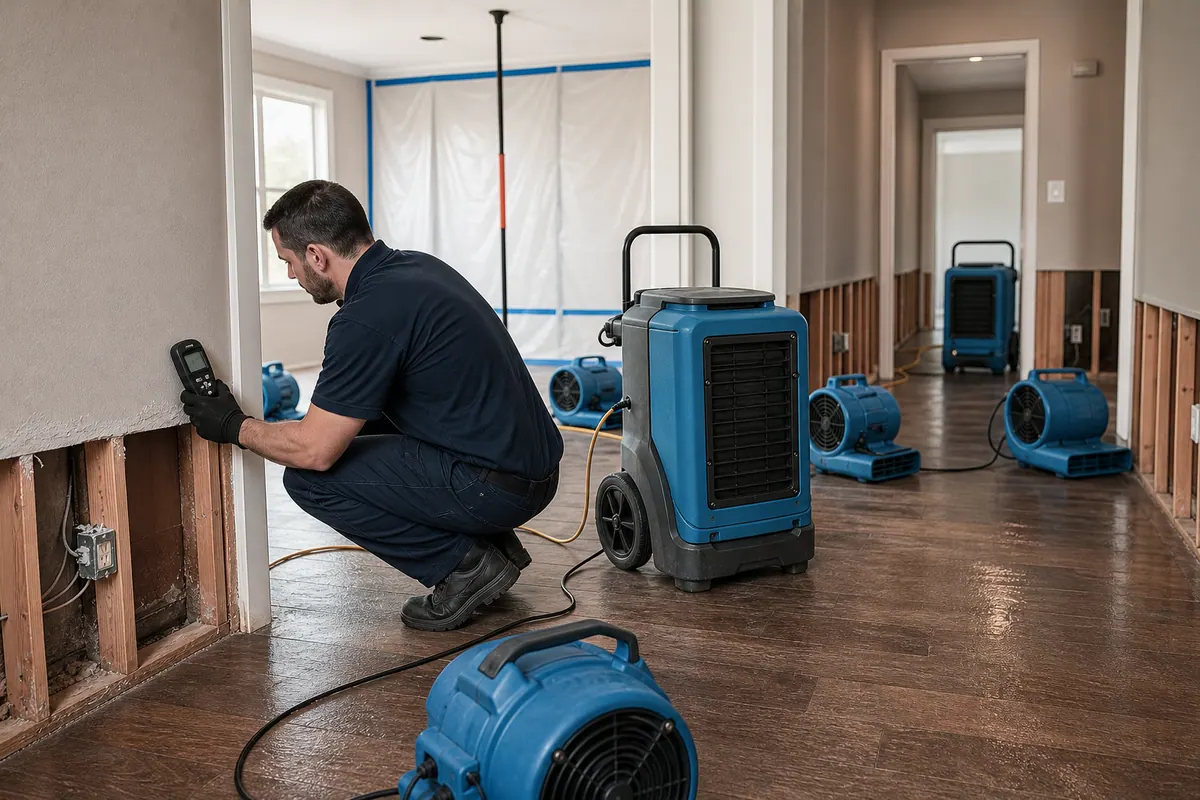
Contents in the affected area are moved, elevated, or covered to reduce contact with water. Saturated carpet pad, wet insulation, and materials that clearly cannot be saved may be removed during this stage to prevent contamination and allow access for drying equipment. Air movers and dehumidifiers are placed to begin reducing moisture levels, and the entire scene is documented with photos and notes.
If you see standing water on your floors, water dripping from a ceiling, a spreading wet spot on drywall, or water pooling near a water heater or appliance, those are signs that mitigation is needed. Do not wait to see whether the water stops on its own. Early action almost always reduces the final cost and scope of the project.
Reach out to our McKinney team if you have an active water event. We will walk you through safe steps you can take immediately and schedule a visit to begin mitigation work.
Mitigation follows a fast, structured sequence to contain and control the loss before it grows.
We identify and stop the water source when it is safe to do so. If a plumber or other trade is needed, we coordinate that step.
Standing water is extracted. Affected areas are isolated to prevent moisture from migrating into dry rooms, hallways, or adjacent units.
Belongings are moved, elevated, or covered. Porous materials that are clearly beyond saving are removed to reduce further absorption and contamination risk.
Drying equipment is set up based on initial conditions. Everything is documented with photos, notes, and moisture readings to support the next phase of the project.
Water that sits longer travels further. Early mitigation keeps the loss contained, which often reduces demolition and repair costs.
Furniture, electronics, documents, and personal items can often be saved if they are moved and protected before prolonged exposure.
Many policies expect reasonable mitigation efforts. Documented early action demonstrates that you took responsible steps to limit the loss.
Fast water removal and initial drying reduce the chance of subfloor warping, drywall deterioration, and concealed mold conditions.
No. Mitigation focuses on stopping additional damage — source control, water removal, contents protection, and containment. Restoration follows and includes full drying, cleaning, and repairs. Mitigation is the emergency response; restoration is the recovery.
As soon as possible. The longer water sits, the further it travels and the more material it damages. In warm McKinney conditions, delayed mitigation can lead to significantly larger projects.
Many policies expect reasonable steps to limit further damage. Documented mitigation efforts can support your claim and demonstrate responsible property management. Coverage details depend on the policy.
If you can safely shut off the water supply, do so. If not, keep people away from the area — especially if there is an electrical hazard — and call us. We can coordinate with a plumber if a repair is needed before mitigation can proceed.
If water is actively spreading in your home or business, early mitigation can make the difference between a contained project and a major loss. Call our team for guidance and fast dispatch.