Water-damaged hardwood may be salvageable if dried correctly. Our McKinney team evaluates wood species, installation type, cupping severity, and subfloor conditions before recommending whether drying or replacement is the better path.

Hardwood flooring represents a significant investment, and water damage does not automatically mean replacement. With the right assessment and controlled drying, many water-damaged hardwood floors in McKinney homes can be dried, flattened, and refinished rather than torn out.
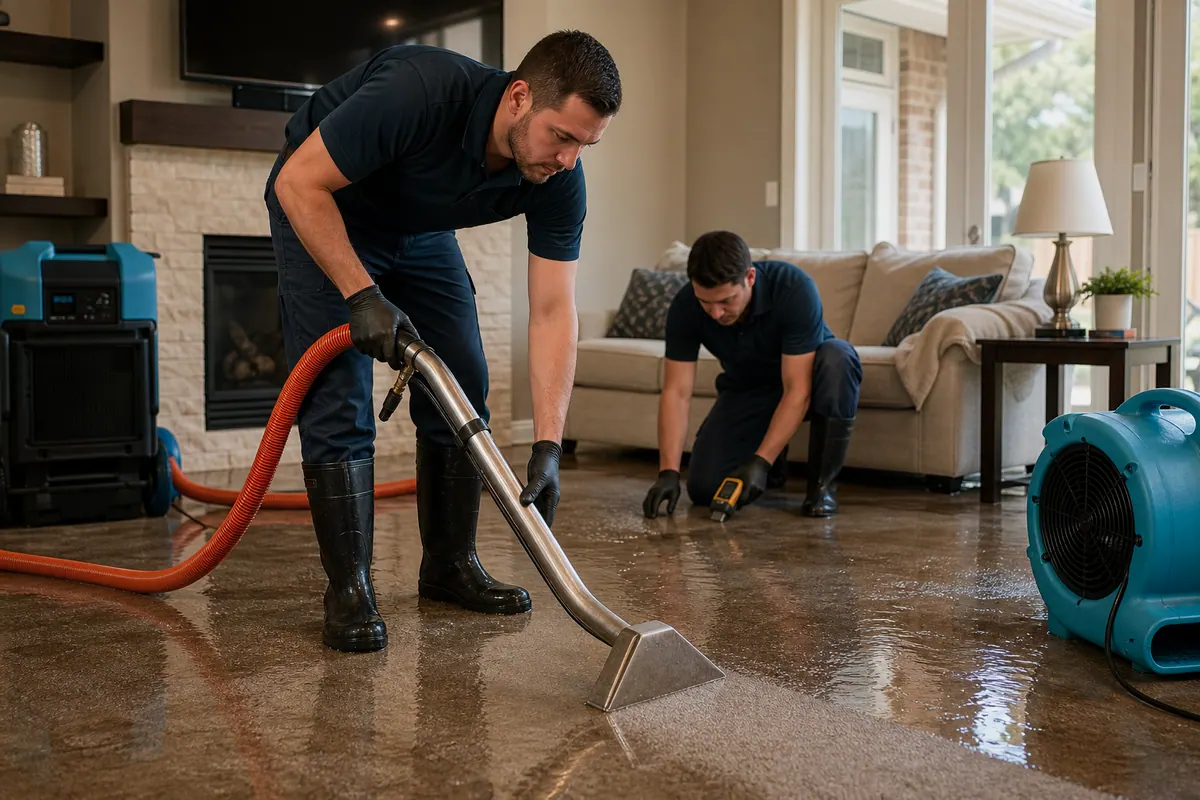
Our specialized McKinney wood floor drying contractors use targeted floor mat extraction systems to reverse cupping and salvage natural wood floors.
The key is understanding how water affects different wood species, installation methods, and finish types — and then drying gradually rather than aggressively. Rapid drying can cause cracking and splitting, while delayed drying allows moisture to penetrate deeper and reduces the chance of successful recovery.
When water contacts hardwood, the wood absorbs moisture and expands. This expansion causes cupping — the edges of each board rise higher than the center, creating a wavy surface. Cupping is a sign of moisture imbalance between the top and bottom of the board, usually because the subfloor below is wetter than the finished surface above.
If cupping is caught early and the wood has not buckled, delaminated, or separated from the subfloor, gradual drying can allow the boards to flatten as the moisture equalizes. Crowning — the opposite of cupping — can occur if the floor is sanded before it is fully dry, which is why patience and monitoring are critical.
Hardwood needs to dry gradually and evenly. Aggressive heat or heavy airflow can cause cracking. Sanding or refinishing before the wood is completely stable leads to crowning and finish failure. Both surface and subfloor readings should be verified before any refinishing or replacement decision is made.
We begin with moisture readings on the wood surface and the subfloor below. Readings are taken across the affected area and compared to unaffected reference areas in the home. This tells us how much moisture the wood absorbed and whether the subfloor underneath is also holding water.
Drying equipment is placed to promote gradual, even moisture release. Air movers are set at controlled volumes, and dehumidifiers manage the surrounding humidity. We monitor readings regularly and adjust equipment based on progress. The goal is to bring the wood and subfloor back into equilibrium without causing additional damage from rapid drying.
Not every water-damaged hardwood floor can be saved. Factors that affect salvageability include the wood species and its density, whether the installation is solid or engineered, how long the water was present, the contamination level of the water, and whether the boards have buckled, delaminated, or separated from the subfloor. We provide honest guidance based on readings, visual condition, and experience — not assumptions about what can or cannot be saved.
If you have water-damaged hardwood floors in your McKinney home, contact us for a moisture assessment before making decisions about replacement or refinishing.
Hardwood drying requires a measured, patient approach that protects the wood while removing moisture.
We measure moisture in the wood surface, subfloor, and reference areas. This data determines the drying plan and salvageability outlook.
Air movers and dehumidifiers are set at levels that promote gradual drying without cracking or splitting. Aggressive drying is avoided.
Moisture readings are tracked throughout the drying period. Equipment is adjusted as the wood releases moisture and conditions change.
Once the wood and subfloor reach target levels, we evaluate whether the floor can be refinished or whether replacement is needed for specific areas.
Different species absorb and release moisture differently. We understand how oak, maple, cherry, and engineered products behave during drying.
Gradual drying prevents cracking, splitting, and crowning. We control the rate of moisture release to protect the wood throughout the process.
The subfloor below the hardwood often holds more moisture than the visible surface. We monitor both layers to ensure complete drying.
Successfully drying hardwood floors can save thousands compared to full replacement. Our honest assessment tells you which option is realistic.
In many cases, yes. Cupping is caused by moisture imbalance and often resolves as the wood dries gradually and evenly. However, boards that have buckled, delaminated, or been cupped for an extended period may not fully recover. We assess each situation individually.
Hardwood drying is typically slower than drying other materials because the wood must release moisture gradually. Expect several days to two weeks depending on the severity, wood species, and subfloor conditions.
No. Sanding cupped floors before they are fully dry and stable leads to crowning — a condition where the center of each board becomes higher than the edges. Always wait for verified dry readings before refinishing.
If the water damage is from a covered event, the cost of professional drying is typically included in the restoration scope. Drying is generally less expensive than full replacement, which also supports the claim process.
Do not make replacement decisions before getting moisture readings. Call our team for an honest hardwood assessment and professional drying plan.