Flood damage is different from a standard water loss. It often involves contaminated water, extensive material removal, and a longer recovery process. Our McKinney team handles flood restoration from extraction through reconstruction planning.

Flood damage presents challenges that typical interior water losses do not. When outside water enters a home — whether from flash flooding, stormwater runoff, or overwhelmed drainage — it brings soil, debris, and potential contaminants that change how the cleanup and restoration must be handled. Materials that could be dried and saved after a clean supply-line break may need to be removed entirely after a flood event.
Working with certified flood restoration professionals in McKinney ensures proper contamination assessment, sanitation, and thorough structural dehumidification.
McKinney and surrounding Collin County communities can experience heavy rainfall and flash-flood conditions, particularly during spring and early summer storm seasons. While McKinney is not a coastal city, intense downpours can overwhelm drainage systems and push surface water into garages, lower-level rooms, and through foundation seams.
One of the most important distinctions in any water loss is the source and category of the water. Interior plumbing failures typically involve clean or gray water, which may allow some materials to be dried in place. Outside floodwater is generally classified as contaminated because it may contain soil, sewage overflow, chemicals, and biological material. This classification affects which materials can be salvaged, how cleaning is performed, and what protective equipment the crew uses.
Standard homeowner insurance policies typically do not cover damage from outside flooding. Separate flood insurance — often through FEMA's National Flood Insurance Program — is required for this type of coverage. We document flood damage thoroughly regardless of coverage status, as this documentation may be needed for claims, FEMA assistance, or other recovery programs.
After confirming the property is safe to enter, we begin by removing standing water and debris. Porous materials like carpet, carpet pad, drywall below the flood line, and insulation are typically removed because they absorb contaminated water and cannot be reliably cleaned. Hard surfaces are cleaned and treated where appropriate.
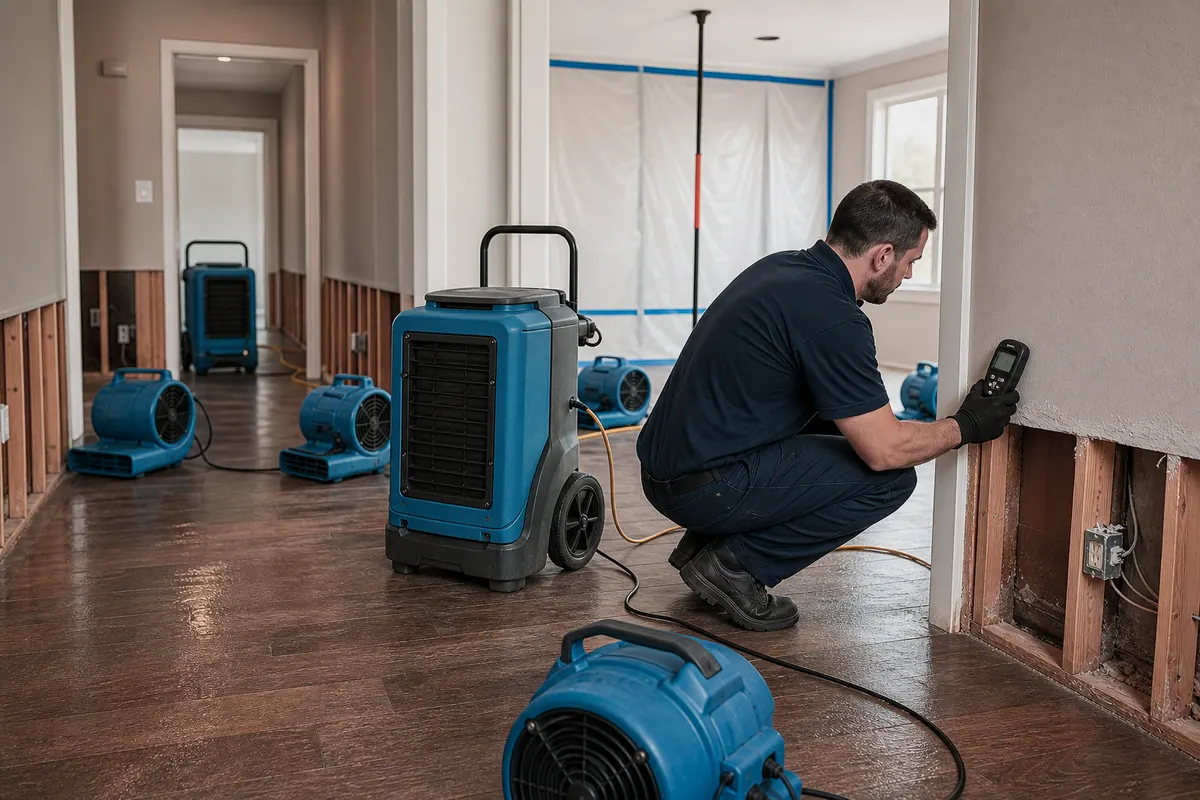
Once affected materials are removed and the space is cleaned, structural drying begins. Concrete, framing, and remaining structural materials must reach verified dry levels before any rebuilding starts. Closing up walls or replacing flooring over damp framing leads to long-term problems that are expensive to correct.
Flood restoration often involves significant reconstruction. Our team documents the full scope of material removal, drying, and cleaning so that reconstruction planning starts with accurate information. Whether you are coordinating with an insurance adjuster, a FEMA representative, or funding repairs out of pocket, clear documentation matters.
If your McKinney property has been affected by flood water, contact us for a thorough assessment and a clear explanation of what recovery involves.
Flood recovery requires a methodical approach that addresses contamination, removal, cleaning, drying, and reconstruction.
We confirm the property is safe to enter, classify the water source, and identify materials that have been compromised by contaminated floodwater.
Standing water and debris are removed. Porous materials below the flood line — carpet, pad, drywall, insulation — are typically removed for safety and drying access.
Remaining structural surfaces are cleaned and treated. Drying equipment is placed to bring framing, concrete, and remaining materials to verified moisture levels.
The full scope is documented for insurance or assistance programs. Reconstruction planning begins once the structure is confirmed dry and clean.
Floodwater carries soil, bacteria, and potential sewage. Proper classification and material handling protect your family and the integrity of the restoration.
We remove what must go and preserve what can be saved. Selective demolition above the flood line protects unaffected areas and reduces rebuild costs.
From scope documentation to material selection, we help bridge the gap between emergency work and the rebuild so nothing falls through the cracks.
Detailed photos, readings, and scope notes support flood insurance claims, FEMA assistance applications, and contractor coordination.
Standard homeowner policies typically exclude damage caused by outside flooding. Separate flood insurance is usually required. We document the damage regardless of coverage to support whatever claim or assistance program applies to your situation.
It depends on the water source, contamination level, and how long materials were submerged. Non-porous materials like concrete, tile, and some metals can often be cleaned and retained. Porous materials like carpet, drywall, and insulation that contacted contaminated floodwater are usually removed.
Flood restoration is typically a multi-week process. Extraction and material removal may take several days, drying can require a week or more, and reconstruction depends on the scope. We provide a realistic timeline after the initial assessment.
Outside floodwater is generally treated as contaminated because of its contact with soil, roadways, drainage systems, and potentially sewage infrastructure. Even if floodwater appears clean, the assumption of contamination drives safer handling and better long-term outcomes.
Flood recovery is complex, but you do not have to navigate it alone. Call our team for a thorough assessment, honest answers, and a structured restoration plan.