When water enters your property, it rarely stays where you can see it. Our McKinney restoration team tracks moisture through walls, under flooring, and behind cabinets to map the full extent before placing equipment. Every step is documented for your records and insurance review.

Water damage restoration is the process of returning a property to a safe, dry, and functional condition after an unexpected water event. It goes well beyond mopping up visible puddles. A proper restoration effort identifies where water came from, determines how far it has traveled, removes standing water, dries the structure thoroughly, and plans the necessary repairs.
As experienced McKinney property restoration specialists, we address the full scope of property recovery — from emergency moisture mapping to complete structural drying and repair.
In McKinney, where warm temperatures and seasonal humidity can accelerate secondary damage, the window between a water event and the start of concealed problems is often shorter than homeowners expect. Moisture trapped behind drywall, under luxury vinyl plank, or inside wall cavities can promote swelling, delamination, and conditions favorable to mold if drying is delayed.
Many property owners assume that removing visible water is enough. Unfortunately, what you see on the surface rarely tells the whole story. Water from a burst supply line can travel along framing members, seep between floor layers, and saturate insulation long before it shows on a ceiling or baseboard below. Restoration involves checking these hidden paths with moisture meters and thermal imaging so that nothing is left to dry on its own.
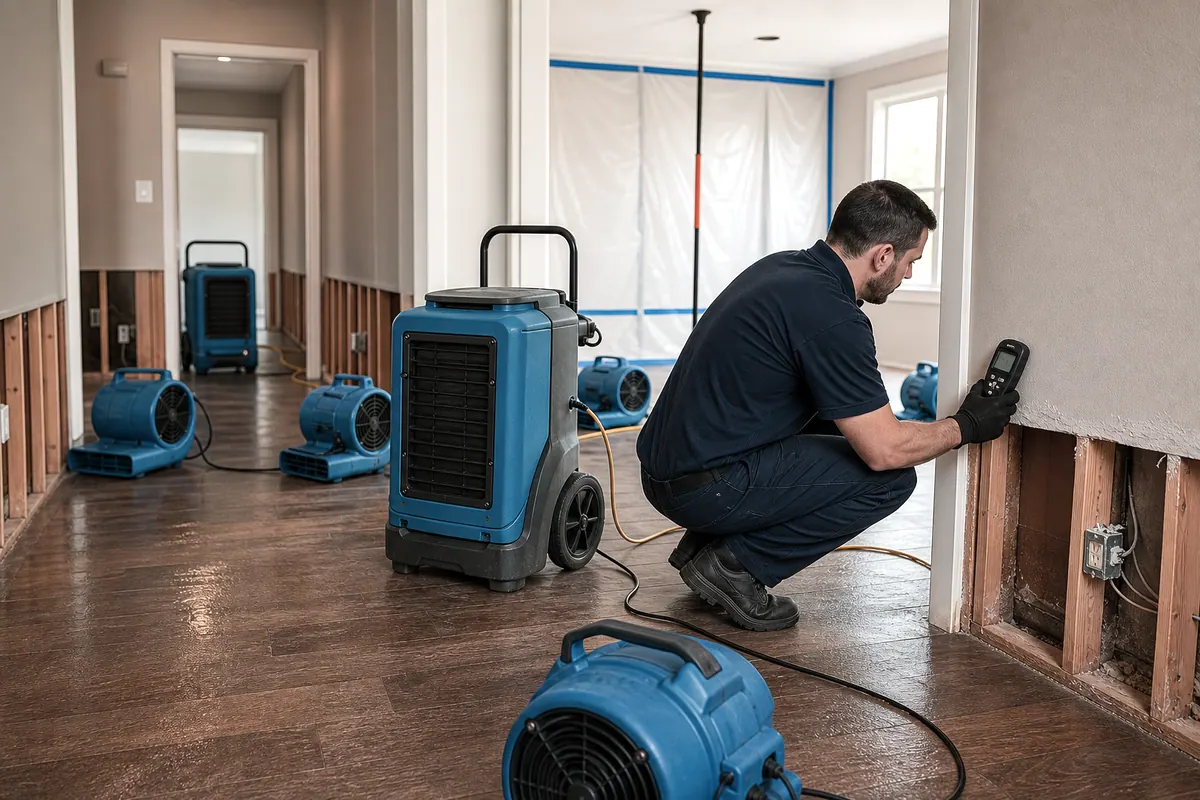
Once the affected area is mapped, water extraction removes standing water and surface moisture. After extraction, structural drying equipment is placed based on actual moisture readings, not assumptions. Air movers, dehumidifiers, and monitoring continue until materials reach acceptable moisture levels.
North Texas weather can shift from heavy rain to warm sunshine quickly. Homes in communities like Stonebridge Ranch, Craig Ranch, and Trinity Falls often have slab foundations and modern building materials that trap moisture differently than older construction. Verified drying protects against long-term problems that surface repairs cannot fix.
Every water loss is different. The scope depends on the water source and its contamination level, how long the water has been present, which materials are affected, whether the water has migrated between rooms or floors, and the structural condition of the property. A supply-line break with clean water that was caught quickly may require only extraction and drying. A sewage backup or long-standing leak may require removal of porous materials, containment, and more extensive cleaning.
Our McKinney team evaluates these factors on-site before recommending a plan. Materials that can be dried safely are dried in place. Materials that are saturated, contaminated, deteriorated, or inaccessible may require selective removal. We explain our findings clearly so you understand what is happening and why.
Some sudden and accidental water losses may be covered by a standard homeowners policy, depending on the cause, policy language, and exclusions. Gradual leaks, outside flooding, and maintenance issues are often handled differently. We organize photos, moisture readings, scope notes, and timelines so that your insurance adjuster has the documentation needed for their review. Coverage depends on the insurer's decision and the specifics of the policy.
If you notice standing water, wet flooring, damp walls, or a musty smell in your McKinney home or business, an inspection can help determine the source, assess the damage, and outline realistic next steps. Reach out to schedule an assessment at a time that works for you.
Each job begins with an honest assessment and follows a structured approach designed to protect your property and simplify the insurance process.
We identify the water source, assess its category, check adjacent rooms, and document initial conditions with photos and moisture readings.
Standing water is removed using professional pumps and extractors. Carpet, pad, and soft materials are evaluated for salvageability during this stage.
Air movers and dehumidifiers are placed based on moisture data. Readings are tracked throughout the drying period and equipment is adjusted as conditions change.
Once the structure is verified dry, we review what needs to be repaired or replaced — from drywall and baseboards to flooring and paint — and document the scope.
We check walls, floors, ceilings, and cavities with meters and thermal imaging — not just the areas that look wet.
Active leaks and spreading water are treated as priorities. We work to contain damage and begin extraction as quickly as conditions allow.
Photos, moisture logs, scope notes, and daily updates organized for easy insurance review and your peace of mind.
We understand local construction types, seasonal weather patterns, and Collin County conditions that affect drying and restoration decisions.
Drying typically requires several days, depending on the affected area, materials involved, water source, and environmental conditions. Warm McKinney weather can help in some cases but may increase humidity challenges in others. Your technician will provide a realistic timeline after the initial assessment.
Not always. If moisture readings show that materials can dry safely in place, we use drying equipment to reach target levels without unnecessary removal. However, materials that are saturated, contaminated, or cannot be accessed for drying may need selective removal. We explain the reasoning before any work begins.
Many homeowner policies cover sudden and accidental water events like a burst pipe or appliance failure. Gradual leaks, outside flooding, and deferred maintenance may have different coverage. We document the damage thoroughly so your adjuster has the information they need for review.
In many cases, yes — especially if the damage is limited to one area. If the water source involves contamination or affects essential systems like plumbing or electrical, temporary relocation may be recommended. We will help you understand your options during the assessment.
Whether you have standing water, damp walls, or a ceiling leak that needs attention, our McKinney restoration team can help you assess the situation and take the right steps. Call for an inspection or schedule a visit.