Mold problems start with moisture. Our McKinney remediation team addresses the moisture source, contains the affected area, removes contaminated materials, and dries the space to prevent recurrence.

Mold develops when moisture remains present in building materials for an extended period. In McKinney, where warm temperatures and seasonal humidity create favorable conditions, mold growth can begin on drywall, wood framing, carpet, insulation, and other organic materials within days of a water event — or gradually over months from a slow, undetected leak.
Working alongside trusted local restoration contractors in McKinney ensures the underlying moisture source is permanently resolved before containment and remediation begin.
Mold remediation is not the same as mold testing or mold assessment. Remediation focuses on correcting the moisture source, containing the affected area to prevent spread, removing materials that cannot be adequately cleaned, and drying the space to prevent recurrence. Testing and assessment may involve separate qualified professionals depending on the scope and applicable regulations.
Every mold problem is a moisture problem. Without correcting the source of moisture — whether it is a roof leak, plumbing failure, condensation issue, or lingering damage from a previous water event — remediation will not provide a lasting solution. Our first step is always to identify and address the moisture source, or coordinate with the appropriate trade if the issue requires plumbing, roofing, or HVAC repair.
We do not make medical claims about mold exposure. We do not promise that a property will be "mold-free" after remediation, as mold spores are naturally present in every environment. We do not disturb suspected mold growth without proper containment, and we respect current Texas regulations regarding mold assessment and remediation.
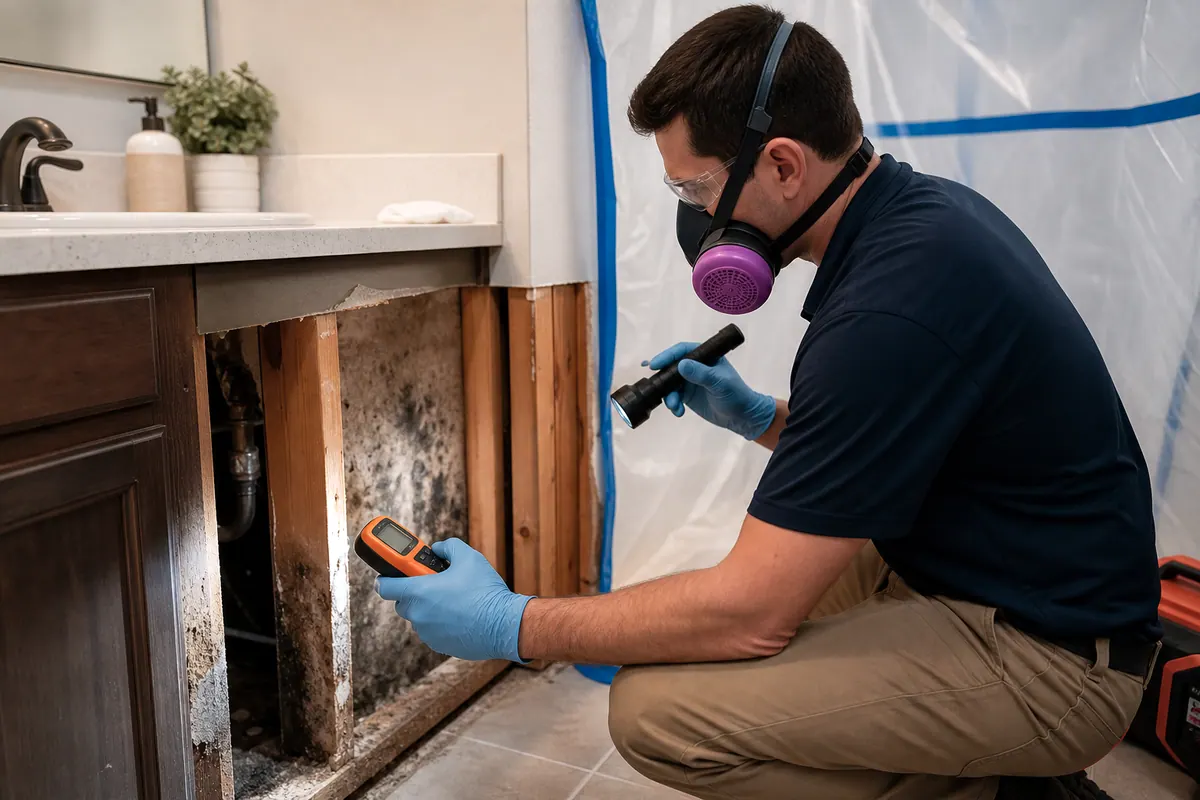
Once the moisture source is corrected, containment barriers are set up to isolate the affected area. This prevents mold spores from migrating to unaffected parts of the property during removal. Materials with visible mold growth that cannot be cleaned — typically porous items like drywall, insulation, carpet, and untreated wood — are carefully removed and discarded.
Remaining structural surfaces are cleaned using appropriate methods. Air filtration equipment helps capture airborne particles during the process. After material removal and cleaning, the area is dried to verified moisture levels using dehumidifiers and air movers.
Post-remediation evaluation may be performed to confirm that the affected materials have been addressed and moisture levels are within acceptable range. If independent testing or clearance is desired, a qualified mold assessor can evaluate the space separately. Our documentation of the remediation scope supports this review process.
If you have noticed visible mold growth, musty odors, or have had a recent water event that was not fully dried, contact our McKinney team for an honest assessment and clear next steps.
Effective remediation addresses moisture, containment, removal, cleaning, and verification — in that order.
We identify and address the moisture source driving the mold growth. If a plumber, roofer, or HVAC technician is needed, we coordinate that step.
Physical barriers isolate the affected area. Air filtration equipment captures airborne particles during the removal process.
Mold-affected porous materials are carefully removed. Remaining surfaces are cleaned using appropriate methods for the substrate and contamination level.
The area is dried to verified moisture levels. Post-remediation evaluation confirms the work is complete and the space is ready for repairs.
We address the moisture source before starting remediation. Without this step, mold returns — no matter how well the cleanup is done.
Physical barriers and air filtration prevent mold spores from migrating to clean areas during the removal process.
We explain what needs remediation and what does not. No unnecessary removal, no scare tactics, and no promises we cannot keep.
We respect Texas mold regulations and licensing boundaries. If third-party assessment or clearance testing is appropriate, we support that process.
No. Mold spores are naturally present in every environment. Remediation removes visible mold growth and contaminated materials, corrects the moisture source, and dries the space. The goal is to return the property to normal conditions, not to eliminate all mold spores from the air.
Not always. If visible mold growth is present, remediation can often proceed based on the visual assessment and moisture findings. However, if the scope is large, if clearance testing is desired, or if regulatory requirements apply, a qualified mold assessor may be appropriate.
Coverage varies significantly by policy. Some policies cover mold resulting from a covered water loss, while others exclude mold entirely or cap coverage at a specific dollar amount. Check your policy language and contact your adjuster for specifics.
A contained remediation in one area may take two to three days for removal and cleaning, plus additional days for drying. Larger or multi-area projects take longer. We provide a timeline after the initial assessment.
If you have visible mold growth or lingering moisture from a past water event, our team can assess the situation, explain your options, and provide professional remediation.