Sewage backups require careful handling. Our McKinney team manages safe removal, contaminated material disposal, disinfection, and drying following proper protocols for your safety and your property.

A sewage backup is one of the most unpleasant and potentially hazardous water events a property owner can face. Whether it originates from a toilet overflow, a blocked sewer line, or a municipal system backup, contaminated water requires a different approach than clean water from a supply line or appliance.
When sewer lines back up, relying on a professional property damage team in McKinney guarantees safe biohazard extraction, antimicrobial treatment, and complete sanitization.
In McKinney, older sewer lines, tree root intrusion, and heavy rain events can contribute to sewer backups. When contaminated water enters a home, the priority shifts from simple water removal to safe handling, material removal, disinfection, and controlled drying.
Sewage water — sometimes called Category 3 or "black water" — may contain bacteria, viruses, and other pathogens. Porous materials that contact sewage water, including carpet, carpet pad, drywall, insulation, and unsealed wood, generally cannot be adequately cleaned and should be removed. Hard, non-porous surfaces can typically be cleaned and disinfected.
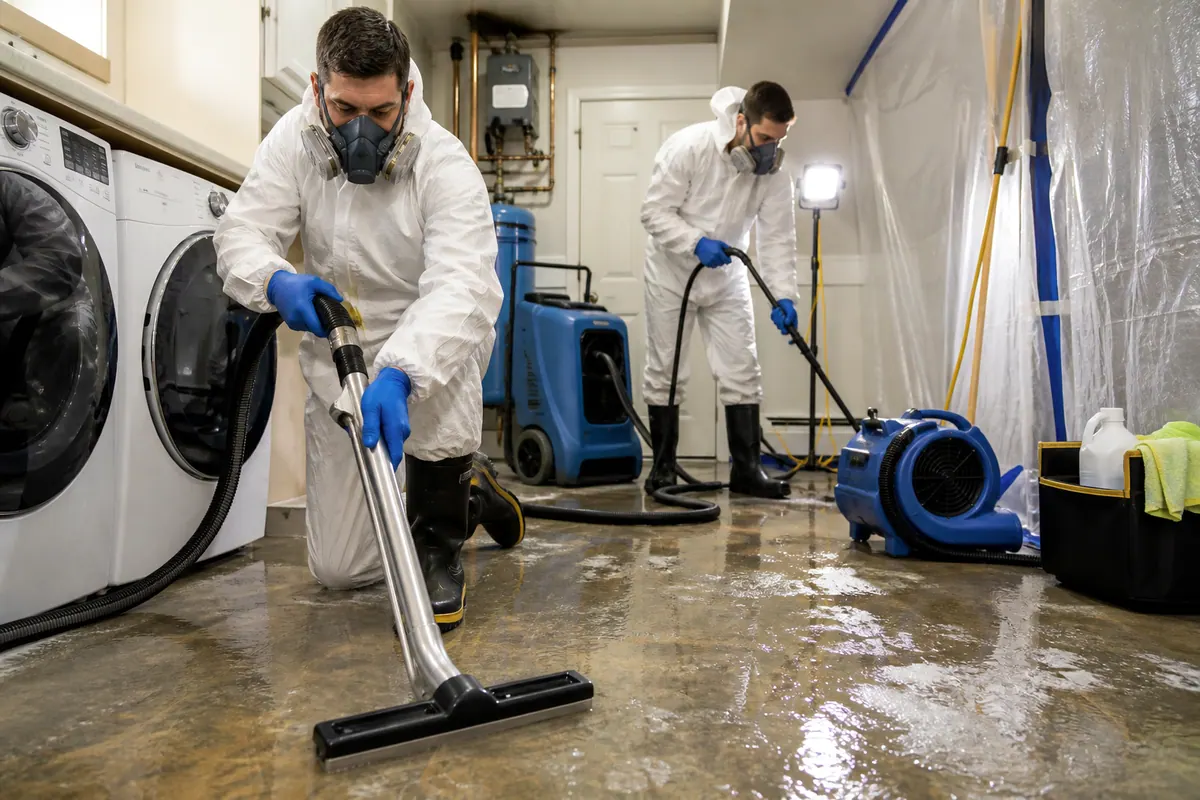
Our crew uses appropriate personal protective equipment and follows contamination protocols during every sewage cleanup. The affected area is contained to prevent cross-contamination to other rooms, and extracted materials are disposed of properly.
Contact with sewage water without proper protection can pose serious health risks. Do not enter a sewage-affected area without appropriate equipment. Keep children and pets away, and avoid using household cleaning tools that may spread contamination.
After establishing restricted access and containment, our team extracts the contaminated water and removes affected porous materials. Remaining hard surfaces are cleaned and treated with appropriate disinfection products. Once cleaning is complete, structural drying equipment is placed to dry framing, concrete, and any remaining materials to safe moisture levels.
Odor is common after sewage events. The most effective approach is removing the source materials rather than masking the smell. Once contaminated materials are out and surfaces are cleaned, odors typically resolve as the structure dries.
Sewage cleanup is disruptive, and we understand the stress it causes. Our team works efficiently to contain, clean, dry, and document the job so you can return to normal as soon as possible. If the backup was caused by a blocked line, you may need a plumber to address the source before cleanup can be completed.
If you are dealing with a sewage backup in your McKinney home, call us. We will guide you on safe immediate steps and dispatch a crew for professional cleanup.
Contaminated water requires a structured, safety-focused approach from start to finish.
The affected area is isolated. Access is restricted, and our crew uses proper protective equipment to prevent cross-contamination.
Contaminated water is extracted. Porous materials that contacted sewage — carpet, pad, drywall, insulation — are removed and disposed of properly.
Hard surfaces are cleaned and disinfected. Odor sources are addressed by removing contaminated materials rather than masking the smell.
Structural drying equipment is placed to dry remaining materials. The job is documented with photos, readings, and scope notes for insurance review.
Proper containment, PPE, and disinfection protocols protect your family and our crew from contamination exposure.
Contaminated materials are removed and disposed of according to proper standards. Nothing is left behind that could cause ongoing problems.
We address odors at the source by removing contaminated materials rather than using temporary masking products.
Photos, scope notes, and moisture data provide a clear record for insurance and ensure nothing is overlooked.
Some policies include sewer backup coverage as an endorsement or rider. Standard policies may not cover it automatically. Check your policy for specific sewer backup language. We document the damage thoroughly regardless to support your claim process.
The cleanup phase — extraction, material removal, and disinfection — typically takes one to two days depending on the affected area. Structural drying continues for several additional days after cleanup is complete.
If contaminated materials are properly removed and surfaces are disinfected, odors should resolve as the structure dries. Persistent odors usually indicate that contaminated material was missed somewhere.
If the backup was caused by a blocked sewer line, you will likely need a licensed plumber to clear the line. We can coordinate with a plumber to ensure the source is fixed before cleanup is finalized.
Do not handle contaminated water without proper protection. Call our team for safe, professional sewage cleanup and guidance on immediate safety steps.