Standing water needs to come out quickly and completely. Our McKinney team uses professional pumps and extractors to remove water from floors, carpet, subfloors, and hard-to-reach areas before it absorbs deeper into the structure.

Water extraction is the physical removal of standing and surface water from a property. It is one of the most time-sensitive steps in any water loss because the longer water remains on flooring, against baseboards, and trapped in carpet pad, the deeper it absorbs and the more damage it causes.
Our dedicated McKinney water extraction and drying team deploys high-volume pumps and truck-mounted units to extract standing water before it migrates into subfloors.
Household mops, towels, and shop vacuums can handle small spills. But when a water heater fails, a supply line bursts, or stormwater enters a McKinney home, the volume of water overwhelms household tools. Professional extractors are designed to remove large volumes of water efficiently from carpet, tile, hardwood, vinyl plank, and concrete surfaces.
Extraction typically starts with the deepest standing water. Portable pumps and weighted extractors pull water from carpet and pad, tile grout lines, hardwood crevices, and the perimeter where flooring meets walls. Special attention goes to edges, transitions, and areas beneath furniture or appliances where water collects and is often missed.
Carpet and pad are evaluated during extraction. In many cases, carpet can be saved if it is extracted and dried promptly, but saturated carpet pad often needs to be removed because it holds moisture and is difficult to dry thoroughly. Hard surfaces like tile and vinyl plank may appear dry on top while water remains trapped underneath — extraction along edges and seams helps address this hidden moisture.
Extraction removes bulk water, but the structure still holds absorbed moisture in walls, subfloors, and framing. Structural drying with air movers and dehumidifiers is always required after extraction to bring materials to safe moisture levels.
In warm weather, water that sits on flooring for even a few hours can begin affecting subfloor materials — especially OSB and plywood, which swell when exposed to prolonged moisture. Homes in McKinney neighborhoods like Stonebridge Ranch, Eldorado, and West McKinney often feature modern flooring assemblies where water can travel underneath without visible surface signs. Getting the water out quickly limits the number of materials that need to be replaced later.
Once bulk water is removed, we take moisture readings to understand what the structure absorbed during the event. These readings guide the placement of drying equipment and establish a baseline for monitoring. Without extraction, drying equipment works against an impossible volume of water. Without drying, extraction alone leaves absorbed moisture behind. The two work together to return the property to a dry, stable condition.
If you have standing water in your McKinney property, call us to schedule fast extraction before the damage spreads further.
Thorough extraction sets the stage for everything that follows — from drying to repair.
We evaluate the volume of standing water, identify the source, and determine which surfaces and materials are affected.
Professional extraction equipment removes bulk water from all affected areas, including carpet, hard surfaces, and hidden pockets along edges and transitions.
Carpet, pad, and soft materials are checked for salvageability. Saturated pad is typically removed to allow proper drying of the subfloor beneath.
Moisture readings establish a baseline across all affected materials. These readings guide equipment placement and confirm the starting point for drying.
Professional pumps and extractors handle far more water than household tools, removing standing water efficiently even in large or multi-room losses.
We target water trapped along baseboards, beneath flooring transitions, under appliances, and in areas household tools simply cannot reach.
Fast extraction often saves carpet, hardwood, and other materials that would need replacement if water exposure continued.
Post-extraction moisture readings create a clear picture of what needs to dry and how long it should take, removing guesswork from the process.
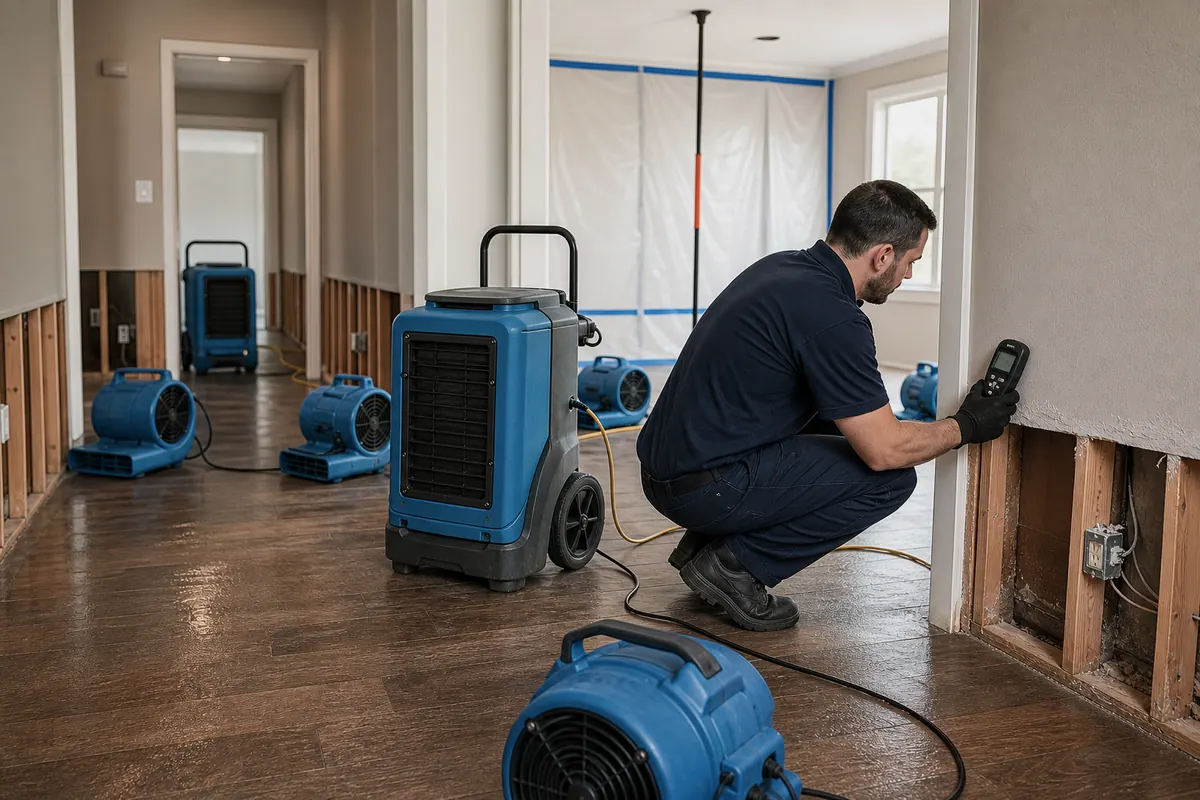
For small spills, a wet/dry shop vacuum can help. For standing water from a burst pipe, appliance failure, or storm entry, professional extractors are needed. They remove more water, faster, and reach areas a shop vacuum cannot access safely.
Not necessarily. Carpet can often be extracted and dried in place if it was exposed to clean water and is caught quickly. However, carpet pad usually needs to be removed because it absorbs heavily and dries poorly. We evaluate on-site and explain our recommendation.
No. Extraction removes bulk standing water, but walls, subfloors, and materials still hold absorbed moisture that requires structural drying. Extraction is an essential first step, but it must be followed by monitored drying to fully address the loss.
Extraction itself typically takes a few hours depending on the area and volume. A single room with moderate standing water can be extracted quickly. Larger or multi-room events take longer. We begin as soon as we arrive and work efficiently to minimize exposure time.
The sooner water is extracted, the less damage it causes. Call our team for professional extraction that reaches every affected area and sets the stage for complete drying.