After water extraction, hidden moisture remains in walls, subfloors, and cavities. Our McKinney team uses dehumidifiers, air movers, and daily monitoring to verify that every material reaches safe moisture levels before repairs begin.

Structural drying is the controlled process of removing absorbed moisture from building materials after a water event. It follows extraction and focuses on what the eye cannot see — moisture trapped inside drywall, beneath flooring, within wall cavities, in subfloor layers, and behind cabinets. Without proper drying, these materials remain wet long after the visible water is gone.
As a premier McKinney structural drying company, we use low-grain refrigerant dehumidifiers and thermal imaging to achieve verified dry standards.
In McKinney, warm temperatures can be helpful for drying, but seasonal humidity complicates the process. Air movers alone are not enough — dehumidifiers are essential to capture the moisture that air movers push out of materials. The balance between temperature, airflow, and dehumidification is what separates professional drying from leaving fans running and hoping for the best.
A floor that feels dry may still hold elevated moisture in the subfloor beneath it. A wall that looks clean may have wet insulation and damp framing hidden behind the drywall. Replacing baseboards, painting over drywall, or installing new flooring over materials that are not verified dry creates conditions for mold growth, material failure, and costly callbacks.
We use pin and pinless moisture meters to read materials at different depths and thermal imaging to identify temperature patterns that suggest hidden moisture. These readings are taken throughout the drying period and compared to dry reference standards for each material type.
Equipment needs to be adjusted as materials dry. Conditions change as moisture is removed from the structure. Without monitoring and adjustment, drying can stall, take longer than necessary, or miss affected areas entirely. Our team tracks readings and adjusts placement throughout the process.
After extraction, we map moisture levels across all affected materials. This baseline tells us what is wet, how wet it is, and what dry should look like for each material type. Equipment is placed strategically — dehumidifiers manage relative humidity, air movers accelerate evaporation from surfaces, and in some cases, specialty equipment is used for cavities, hardwood, or concrete slabs.
Readings are taken regularly and compared to the baseline. As materials approach dry goals, equipment is repositioned or reduced. Drying is complete when all affected materials have reached verified moisture levels — not when the surface feels dry or the room smells normal.
Once verified dry, the structure is ready for repairs. Materials that were opened for drying access — such as wall sections cut for cavity inspection — can now be replaced. Flooring, baseboards, paint, and other finishes go back in knowing the structure beneath them is dry and stable.
If you had a water event in your McKinney property and are not sure whether the structure is properly dried, contact us for a moisture assessment. We can check existing conditions and recommend next steps.
Professional drying is a monitored, adjustable process — not just setting up fans.
We measure moisture levels in all affected materials and compare to dry reference materials. This establishes the targets for drying completion.
Air movers, dehumidifiers, and specialty equipment are positioned based on moisture data, material types, and the layout of the affected area.
Moisture readings are taken regularly. Equipment is repositioned or adjusted as conditions change throughout the drying period.
Drying is complete when all affected materials reach documented moisture goals. A final reading confirms the structure is ready for repairs.
Every equipment placement and adjustment is based on actual moisture readings — not guesswork, schedules, or arbitrary timelines.
We manage the relationship between temperature, humidity, and airflow to create conditions that pull moisture from materials efficiently.
Wall cavities, subfloors, and ceiling spaces hold moisture that surface fans cannot reach. We target these areas with appropriate techniques and equipment.
We do not pull equipment based on time. Drying is complete when readings confirm it — documented and defensible for insurance and repair purposes.
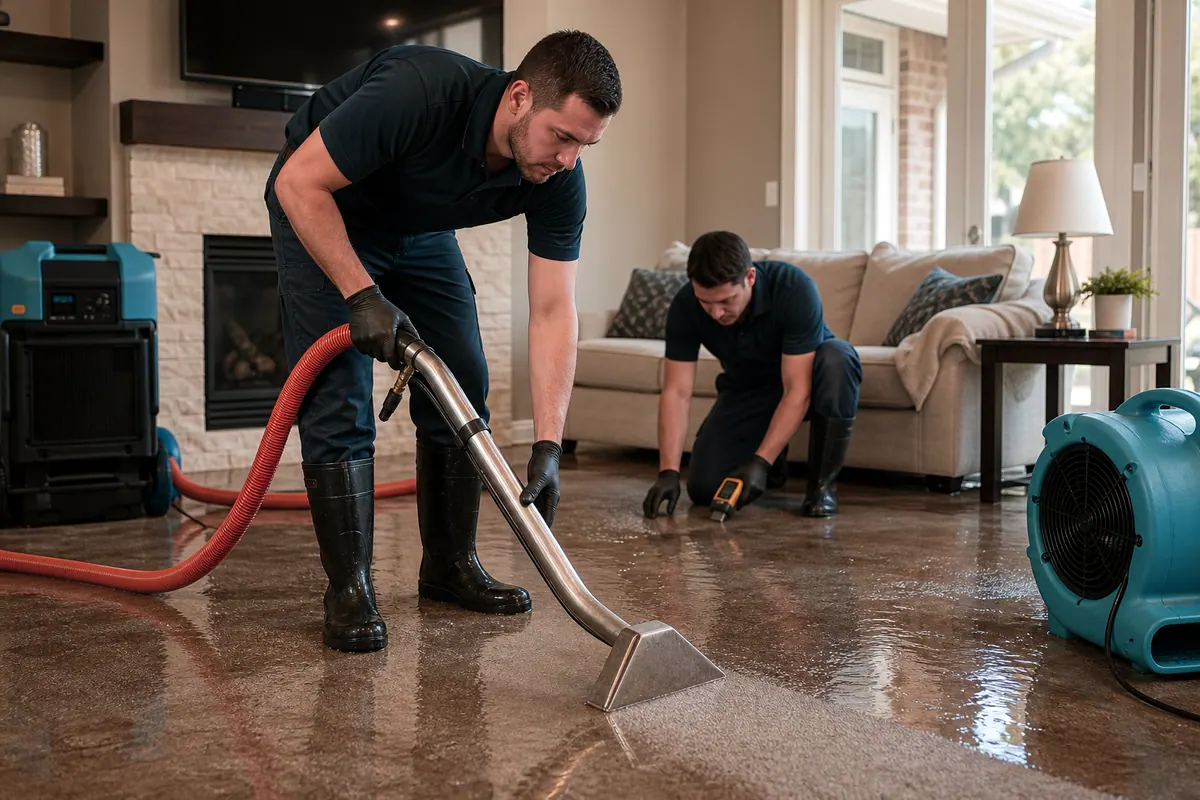
Most residential drying projects in McKinney take three to five days, but the actual duration depends on the materials involved, the extent of moisture, ambient conditions, and the water source. We do not pull equipment on a fixed schedule — we pull it when readings confirm the job is done.
Air movers push moisture out of materials and into the air. Without dehumidifiers to capture that moisture, the humidity rises and materials stop drying effectively. Dehumidifiers are essential — fans alone are not enough.
Often, yes. If moisture levels indicate that drying is progressing through the intact wall surface, removal may not be necessary. However, if moisture is trapped in an inaccessible cavity or the wall is too saturated, limited openings may be needed for access.
We take moisture readings from affected materials and compare them to dry reference standards. Drying is documented as complete when all materials meet those standards — not when the room feels dry or a certain number of days have passed.
Do not close up walls or replace flooring until the structure is verified dry. Call our team for professional, monitored drying that protects your property and your repair investment.