Severe weather in North Texas can damage roofs, break windows, topple trees, and drive rain into your home. Our McKinney team handles interior water intrusion, drying, temporary protection, and damage documentation.

McKinney and Collin County experience severe thunderstorms, high winds, hail, and heavy downpours — particularly during spring and early summer. These storms can compromise roofing, shatter windows, drive rain through gaps, and push water into homes through openings that did not exist before the storm.
We specialize in comprehensive storm damage restoration in McKinney, securing storm-created openings and extracting interior rainwater quickly.
Storm damage restoration focuses on the interior water damage caused by storm-created openings, wind-driven rain, and falling debris. Our role begins where the exterior damage lets water inside — extracting that water, drying affected materials, and documenting the loss for insurance review.
Wind-driven rain can force water through windows, doors, and roof penetrations that are normally weathertight. Hail or falling branches can puncture roofing, siding, or soffits, creating direct pathways for rainwater. Overloaded gutters and downspouts can push water against the foundation or into wall cavities. In some cases, severe wind removes shingles entirely, exposing the roof deck to prolonged rainfall.
Once water enters, it follows the same paths as any interior water event — through ceiling cavities, down walls, into insulation, and across flooring. The difference is that storm damage often introduces water at multiple entry points simultaneously, making the affected area larger and more complex.
If a storm has created an opening in your roof, siding, or windows, temporary protection — such as tarps or board-up — can help prevent additional water entry until permanent repairs are made. Our team can help coordinate this step alongside interior water damage cleanup.
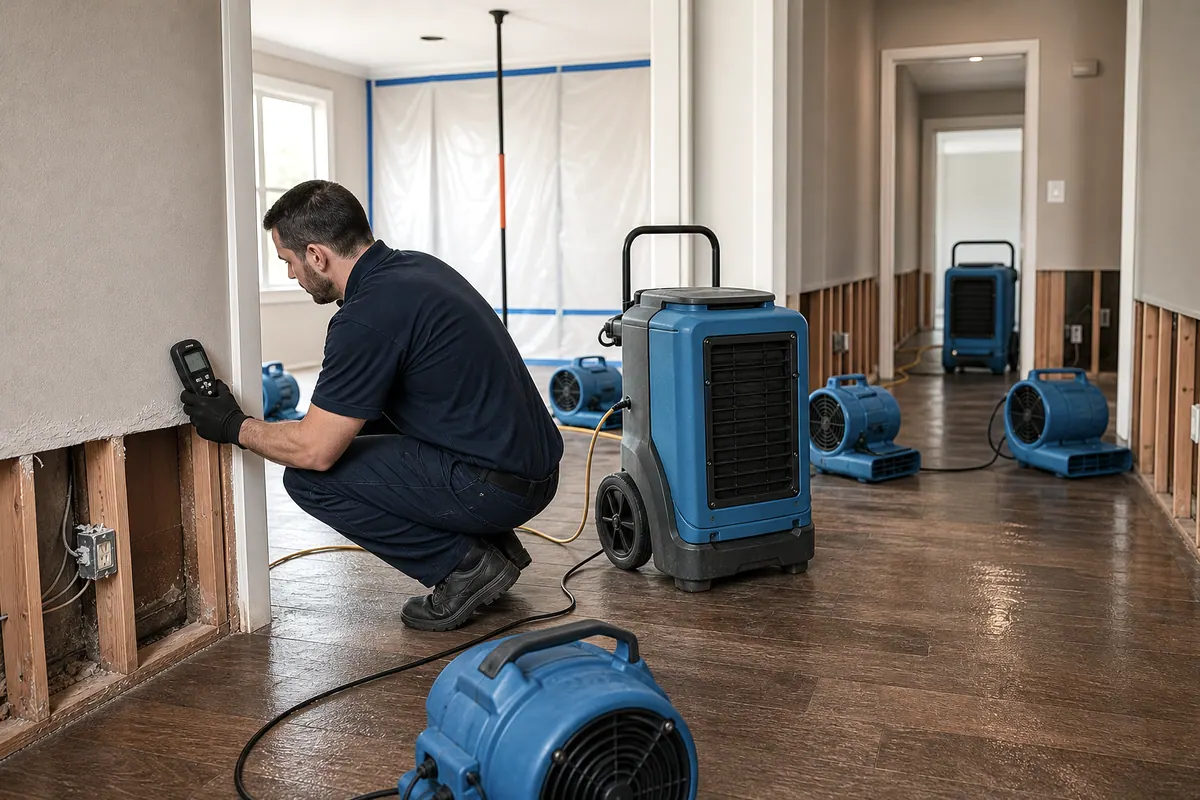
Our focus is on the water that has entered the building. We extract standing water, assess moisture levels in ceilings, walls, and flooring, remove materials that cannot be dried safely, and place drying equipment. For roof leaks, we often need to dry the ceiling cavity thoroughly before any drywall closure or paint work can begin.
Storm damage frequently involves coordination with other trades — roofers for shingle replacement, window companies for glass repair, tree services for debris removal. We document the interior damage clearly so that your insurance adjuster, roofer, and our team are all working from the same information.
Storm season in McKinney can be unpredictable. If your property has sustained storm damage that let water inside, do not wait for the exterior repair to begin interior drying. The sooner moisture is addressed, the less secondary damage occurs. Call our team for an assessment and we will help you prioritize the right steps.
Storm damage requires coordination between interior water damage work and exterior repair trades.
We evaluate where water entered, how far it spread, and which materials are affected. Moisture readings establish the scope for drying.
If the storm created openings in the roof, windows, or exterior, temporary measures are coordinated to prevent additional water entry during the restoration process.
Interior water is extracted. Drying equipment targets ceilings, walls, flooring, and cavities affected by wind-driven rain or roof leaks.
Interior damage is documented for insurance. We coordinate with roofers, window companies, and other trades so the full restoration stays on track.
Storms can introduce water through multiple points simultaneously. We check every potential entry point and trace water paths through the structure.
Roof leaks push water into ceiling cavities where it can spread widely before becoming visible. We dry these hidden spaces before closure.
Roofers handle the exterior. We handle the interior water damage. Coordinating both ensures nothing is missed and repairs are not premature.
Insurance claims after storms require detailed interior documentation. We provide photos, moisture data, and scope notes alongside exterior assessments.
No. Interior drying should begin as soon as possible, even with temporary protection in place. Waiting for permanent roof repair can allow moisture to spread deeper into walls, ceilings, and flooring, increasing the overall damage.
Storm damage from wind, hail, and rain entering through storm-created openings is generally covered by standard homeowner policies. Coverage depends on the cause, policy terms, and deductible. We document the interior damage thoroughly for your claim.
Look for water stains, soft spots, paint bubbling, or sagging drywall. After storms, check attic spaces for wet insulation or dripping. Moisture meters can detect hidden moisture that is not yet visible on the surface.
We can coordinate temporary protection for storm-created openings. Our primary focus is on interior water damage extraction and drying, but we ensure the property is protected during the restoration process.
If a storm has let water into your home, do not wait for exterior repairs to start drying the interior. Call our team for fast assessment and extraction.